
If you’ve seen “ash” pop up in a DM, a comment, or a group chat and had no idea what it meant, you’re not alone. It’s one of those small words that carries a surprising amount of weight depending on who typed it, where, and why. This guide breaks down every real meaning of “ash” in text — the slang version, the literal one, the funny one, and even how it shows up in Spanish — so you’ll never have to guess again.
What makes “ash” tricky is that it doesn’t follow the usual rules of internet abbreviations. It isn’t an acronym you can decode letter by letter, and it isn’t limited to one app or one age group — it shifts meaning depending on capitalization, sentence position, and the platform it shows up on.
Ash Meaning in Text – Quick Meaning
Simple definition:
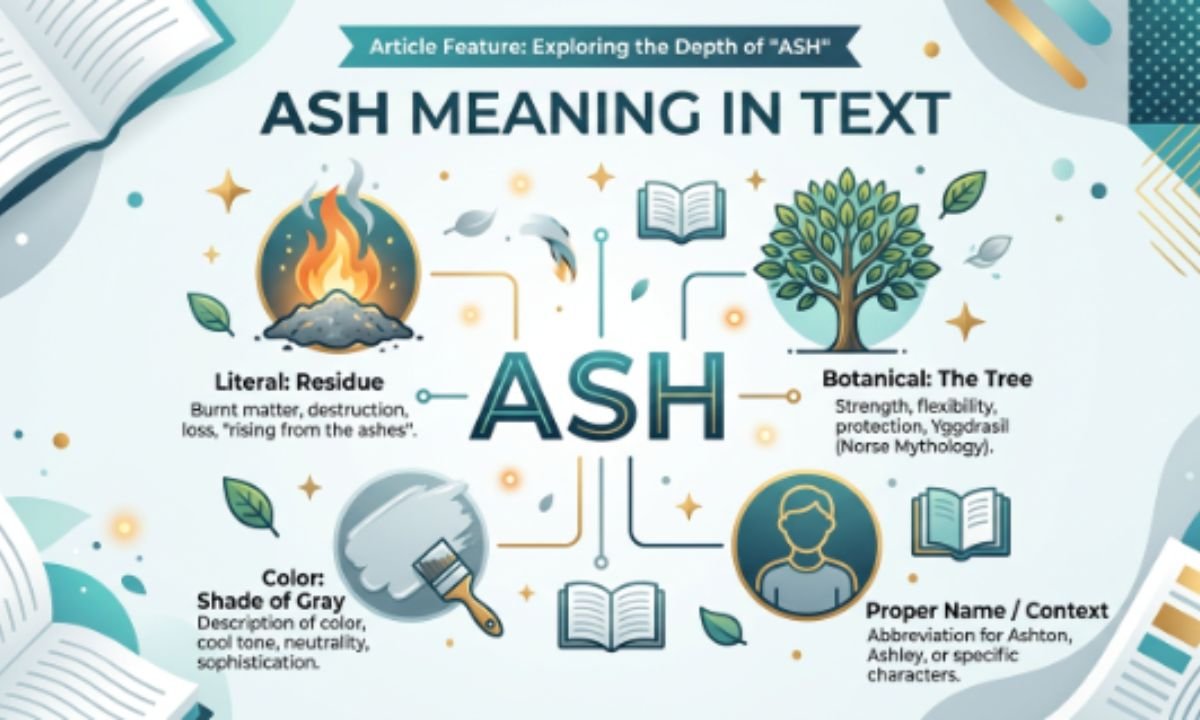
In most modern texting, “ash” is slang shorthand for “as hell.” It’s used right after an adjective to make a feeling or description sound more extreme, the same way someone might say “super” or “extremely” in a more formal sentence. Outside of slang, “ash” can also be the literal word for burnt residue, a short form of names like Ashley or Ashton, or an intensifier borrowed from spoken dialects that eventually made its way into texting culture.
Examples:
- “I’m tired ash” → I’m extremely tired
- “That movie was funny ash” → That movie was really funny
- “This traffic is annoying ash” → This traffic is incredibly annoying
- “Ash just texted me back” → (referring to a person named Ash)
- “There was ash all over the balcony after the fire” → literal burnt residue
Origin & Background

The slang use of “ash” as an intensifier has roots in casual spoken English, where words get clipped for speed and rhythm rather than spelled out in full. “As hell” is a phrase people have used for decades to describe something extreme — “cold as hell,” “tired as hell,” “broke as hell.” Over time, especially in fast-typed conversations on phones, that three-word phrase got compressed down to a single syllable: ash.
Texting and social media accelerated this shift. Character limits, the need to type quickly, and a culture that rewards short, punchy phrasing all pushed “as hell” toward “ash.” It picked up steam through casual chats, comment sections, and short-form video captions, where brevity reads as more natural and less try-hard than spelling things out.
It’s worth noting that “ash” the literal word — fine grey powder left after something burns — has existed in English for centuries, tracing back to Old English “æsce.” The slang meaning didn’t replace that; it just added a second, unrelated layer of meaning that depends entirely on context.
Real-Life Conversations
WhatsApp Chat
Friend: “How was the hike?” You: “Beautiful but tiring ash 😩”
Here, “ash” simply amplifies how tired the hike left you. WhatsApp conversations tend to be more personal, so the slang comes across as casual and familiar rather than performative.
Instagram DMs
Them: “This fit is clean ash 🔥” You: “Thank you omg”
On Instagram, “ash” often shows up as a compliment booster in DMs or comment replies, adding extra enthusiasm without needing extra words or emojis to get the point across.
TikTok Comments
“This is accurate ash 💀” “Bro said something real ash and left 😭”
TikTok comment sections lean heavily on quick, meme-adjacent phrasing, and “ash” fits right into that rhythm. It’s often paired with skull or crying emojis to signal humor or exaggerated reaction.
Text Message
Text: “Running late, traffic is bad ash rn”
A plain, everyday example — no emojis needed, just a quick way to stress how bad the situation is.
Ash meaning in text funny
Part of why “ash” caught on is that it sounds a little silly on its own, which makes it feel funny even when the sentence itself isn’t a joke. Saying something is “weird ash” or “random ash” adds a light, almost cartoonish emphasis that softens whatever is being described. It’s frequently used sarcastically too — calling something “impressive ash” when it clearly wasn’t is a common way to poke fun at a situation without sounding harsh.
Ash meaning in Spanish
In standard Spanish, “ash” isn’t a native word — the literal translation of the English word “ash” (burnt residue) is ceniza, a feminine noun (la ceniza). If you’re asking about the texting slang version, Spanish speakers typically don’t use “ash” the same way; instead, similar emphasis is added with words like “súper,” “bien,” or regional intensifiers such as “bien feo” or “cansadísimo.” That said, because slang spreads quickly through bilingual online spaces, some Spanish-speaking teens influenced by English social media do borrow “ash” directly in mixed-language texts, using it exactly the way English speakers do.
ash meaning in text slang
As slang, “ash” functions as an intensifier — a word that boosts the strength of whatever comes before it. It almost always follows an adjective (“tired ash,” “cold ash,” “wild ash”) rather than standing alone as a full sentence. Unlike some internet slang that carries a very specific, narrow meaning, “ash” is flexible: it can express exhaustion, excitement, frustration, or humor, with the actual emotion coming from the adjective it’s attached to rather than the word itself.
Emotional & Psychological Meaning
Why people use it:
People reach for “ash” because it lets them express intensity without sounding overly dramatic or formal. It’s short, low-effort, and instantly recognizable to anyone familiar with current texting habits. There’s also a social element — using slang that’s currently popular signals familiarity with online culture, which can make messages feel more relatable and less stiff, especially among younger texters.
A real-life scenario:
Imagine someone texts a friend after a stressful exam: “That test was hard ash, I think I failed.” The word “ash” here isn’t just filler — it communicates genuine frustration and relief at having it over with, packed into a single extra syllable. A friend replying “Same ash, don’t even worry about it” mirrors that tone back, creating a shared, informal emotional shorthand that a fully spelled-out sentence wouldn’t capture in quite the same way.
Usage in Different Contexts
Social Media
On platforms like Instagram, TikTok, and Snapchat, “ash” appears constantly in captions, comments, and quick replies. It fits the fast, visual, emoji-heavy tone that dominates those spaces.
Friends & Relationships
Between friends or partners, “ash” reads as playful and informal — a normal part of everyday texting that doesn’t need explanation.
Work / Professional Settings
In emails, work Slack channels, or messages to clients, “ash” should be avoided. It reads as unprofessional and can confuse colleagues who aren’t familiar with the slang, especially across generations or cultures.
Casual vs Serious Tone
The tone of “ash” shifts entirely based on the sentence around it. “That’s sad ash” keeps a lighthearted tone even when discussing something upsetting, while a more serious version of the same thought would drop the slang entirely: “That’s really sad, honestly.”
When NOT to Use It
- In professional emails, reports, or client-facing messages
- When texting someone significantly older who may not know the slang
- In formal writing, resumes, or cover letters
- When the topic is genuinely serious (grief, illness, emergencies) and casual slang could come across as dismissive
- In customer service or support conversations
Common Misunderstandings
1. Thinking it’s a typo
Because “ash” looks like it could be a mistyped word, some readers assume it’s an accident rather than intentional slang, especially if they’re not familiar with how it’s used.
2. Taking it literally
Without context, a message like “I’m exhausted ash” could confuse someone into thinking “ash” refers to burnt material rather than an intensifier.
3. Tone confusion
Because “ash” can appear in both joking and genuinely emotional messages, readers sometimes misjudge how seriously to take a statement, especially over text where tone isn’t obvious.
Comparison Table
| Meaning | Example | Common Platform | Tone |
| Slang intensifier (“as hell”) | “Cold ash outside” | TikTok, Snapchat, texts | Casual, playful |
| Literal ash (burnt residue) | “Ash covered the fireplace” | Everyday speech, articles | Neutral, factual |
| Name/nickname (Ashley, Ashton) | “Ash is coming over later” | Any platform | Neutral, personal |
| Stylized/caption use | “ash ✨” | Instagram captions | Aesthetic, ambiguous |
Key Insight
Capitalization and sentence position are your fastest clues: lowercase “ash” right after an adjective is almost always slang, while capitalized “Ash” standing alone is usually a name.
Variations / Types
- As hell replacement – the core slang meaning, used as an intensifier
- Literal ash – burnt residue from fire, cigarettes, or volcanic activity
- Name/nickname – short for Ashley, Ashton, or similar names
- Aesthetic/caption use – appears in captions or bios without a fixed meaning, often tied to a “moody” or minimalist online aesthetic
- Sarcastic use – applied to exaggerate a statement ironically, such as calling something “impressive ash” when it wasn’t
How to Respond When Someone Uses It
Casual Replies
“Fr, same ash.” / “Ikr, so ash.”
Funny Replies
“Ash?? Speak English 😭” / “Certified ash moment.”
Mature Replies
“Haha I get it, that does sound rough.” (mirroring the sentiment without needing to use the slang yourself)
Respectful Replies
If you’re unsure whether the other person will understand the slang, simply respond to the meaning behind it: “That sounds really tiring, I’m sorry.”
Regional & Cultural Usage
Western Culture
The slang usage is most common in the United States, particularly among Gen Z and younger millennials, and has spread through social media into the UK, Canada, and Australia.
Asian Culture
In many Asian countries, “ash” is more commonly understood by its literal meaning or as a name, since the slang form is tied closely to American internet culture and hasn’t spread as widely outside English-dominant online spaces.
Middle Eastern Culture
Similarly, in Middle Eastern regions, “ash” slang usage tends to appear mainly among younger, heavily online users who consume a lot of American social media content, rather than in everyday local texting.
Global Internet Usage
Because platforms like TikTok and Instagram are global, the slang meaning does travel — but it’s still strongest wherever American youth culture has the most direct online influence.
Generational Differences
Older generations are far more likely to read “ash” literally or assume it’s a typo, while younger texters recognize it instantly as an intensifier. This gap is a common source of the confusion that sends people searching for what it actually means.
Is It Safe for Kids?
Yes, the slang use of “ash” is harmless on its own — it’s simply an informal way of adding emphasis and carries no explicit or dangerous meaning. That said, since it often appears alongside other slang or in unmoderated comment sections, parents may still want general awareness of the platforms their kids are using rather than worrying about this specific word.
Frequently Asked Questions
What does “ash” mean in a text message?
In most texts, “ash” is slang for “as hell,” used to add emphasis to an adjective, like “tired ash” meaning extremely tired.
Is “ash” a typo for something else?
No, when used after an adjective, “ash” is intentional slang, not a typo — though it can look like one if you’re unfamiliar with the term.
What does “ash” mean on Snapchat or TikTok?
On both platforms, “ash” almost always functions as an intensifier in captions and comments, matching the same “as hell” meaning used elsewhere.
Is “ash” a real word?
Yes — outside of slang, “ash” is a standard English word referring to the powdery residue left after something burns.
What does “ash” mean in Spanish?
The literal translation of “ash” in Spanish is “ceniza”; the English slang meaning isn’t native to Spanish, though it’s sometimes borrowed in bilingual online conversations.
How do you respond when someone texts “ash”?
You can match the casual tone with a short reply like “same ash,” or simply respond to the underlying feeling if you’d rather keep things more neutral.
Is it okay to use “ash” in professional messages?
No, it’s best avoided in work emails, client messages, or formal writing, since it can read as unprofessional or confuse readers unfamiliar with the slang.
Final Thoughts
“Ash” is a small word doing a lot of work — depending on context, it can intensify a feeling, name a person, describe burnt residue, or add a playful edge to an otherwise plain sentence. The fastest way to read it correctly is to look at what surrounds it: lowercase and right after an adjective almost always means “as hell,” while a standalone, capitalized “Ash” is a name. Once you know the pattern, you’ll never second-guess it in a text again.

The author is a professional content writer specializing in word meanings, definitions, and English vocabulary. With over 6 years of experience in language research and educational content creation, they produce accurate, well-researched, and reader-friendly articles.