
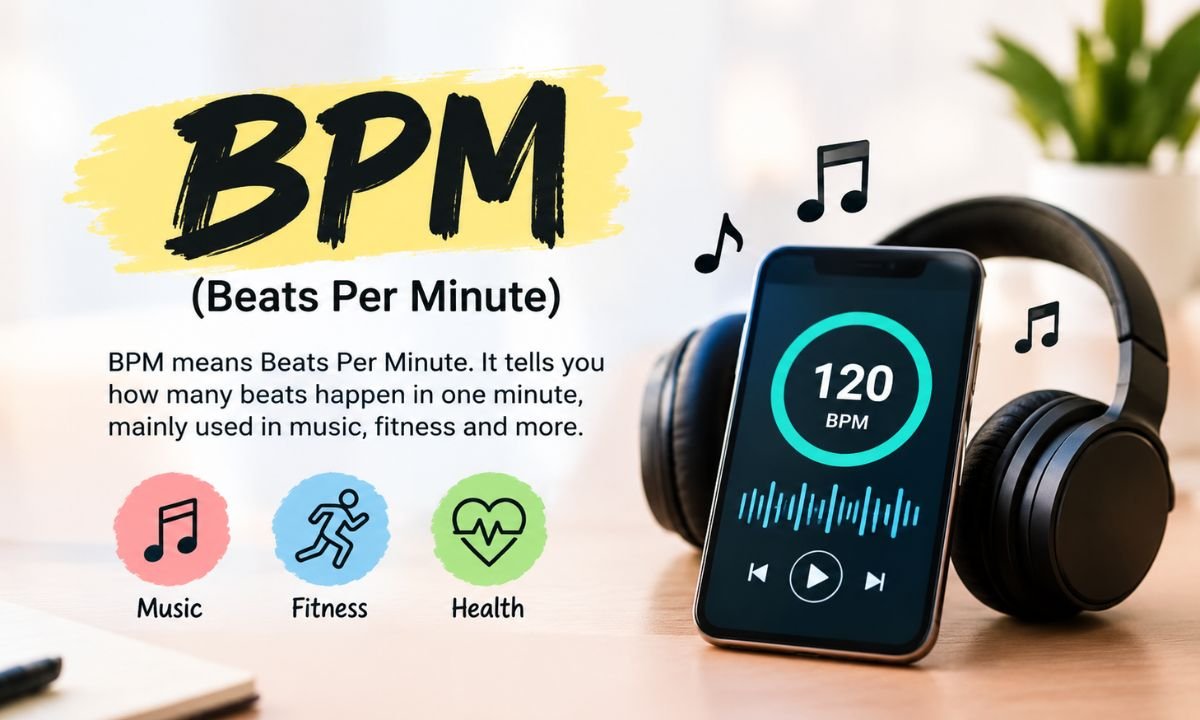
You see “120 BPM” on a music app, “72 BPM” on a smartwatch, and “BPM software” on a business website. Same three letters, three different worlds. No wonder people get confused.
Here is the quick answer. BPM most often means beats per minute, a count of how many beats happen in 60 seconds. In music, it shows tempo. In health, it shows heart rate. In business, it can also mean business process management. This guide explains each meaning, with examples, normal heart rate ranges and easy replies.
BPM – Quick Meaning
BPM stands for beats per minute. It measures how fast something repeats, whether that is a drum beat or your heartbeat. A higher number means faster. A lower number means slower.
BPM Meaning With Common Examples
- “This song runs at 120 BPM.” (music tempo)
- “My resting heart rate is 68 BPM.” (health)
- “We use BPM software to track our approval process.” (business)
Most Common Definitions
- Beats per minute – music tempo and heart rate
- Business process management – a way to design and improve workflows
- Breaths per minute – sometimes used for breathing rate, though “breaths/min” is more common
Heart BPM Means
Heart BPM is the number of times your heart beats in one minute. It is also called your heart rate or pulse. For most adults at rest, 60 to 100 BPM is considered normal.
PR BPM Meaning
“PR” on a pulse oximeter or health monitor stands for pulse rate. “PR 78 bpm” means your pulse is 78 beats per minute.
You’re a Mean One, Mr. Grinch BPM
People search this because “mean” and “BPM” appear together in the song title. The tempo is not one fixed number. Different versions and arrangements range from roughly 100 to 145 BPM, with many swing-style versions near 110. The number depends on who is performing.
Simple Definition
BPM = how many beats happen in one minute.
Example Quotes
- “Set the metronome to 90 BPM and start slowly.”
- “The nurse noted a pulse of 72 BPM.”
- “A good workout playlist sits around 130 BPM.”
Origin & Background
Musical Roots
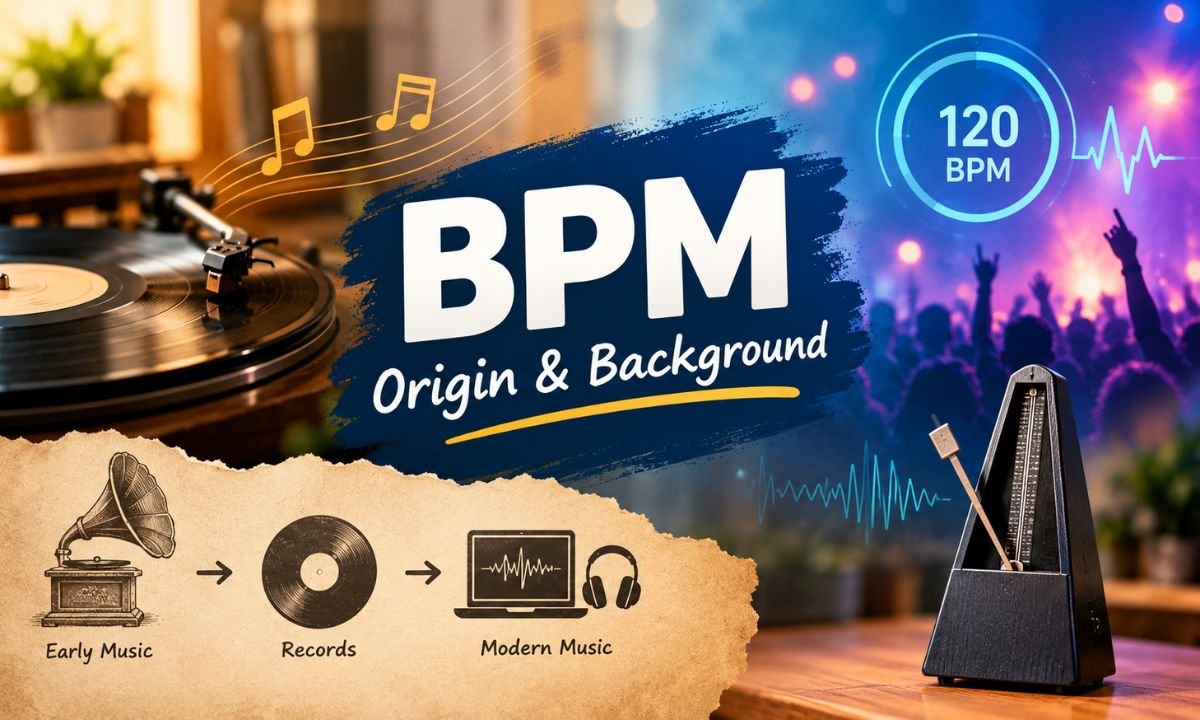
The idea of counting beats grew with the metronome in the early 1800s. Musicians needed a standard way to show how fast a piece should be played. Numbers replaced vague words like “slowly” or “briskly.”
Medical Adoption
Doctors had long counted pulses by hand over a set time. The same unit, beats per minute, became the standard for heart rate. It is simple, clear and easy to compare between patients.
Digital & Internet Expansion
Smartwatches, fitness apps, DJ software and music platforms made BPM everyday language. Today, anyone can check a song’s tempo or their own heart rate in seconds.
Business & Corporate Use
In offices, BPM took a different meaning: business process management. Companies use it to map tasks, remove delays and improve how work moves from start to finish. Here the “M” means management, not minute.
Real-Life Conversations
WhatsApp Chat
Aisha: What’s the best BPM for a running playlist? Hamza: Around 150 to 170 if you’re jogging fast. Aisha: Perfect, making one now.
Instagram DM
Maya: My watch says 55 BPM while resting. Is that okay? Dan: If you’re fit, probably yes. Ask a doctor if you feel dizzy.
TikTok Comments
User 1: What BPM is this beat? User 2: About 128. It’s a classic dance tempo.
Text Messages
Boss: Do we have BPM software yet? Sara: Yes, we’re testing it for invoice approvals.
Emotional & Psychological Meaning
Music & Mood Connection
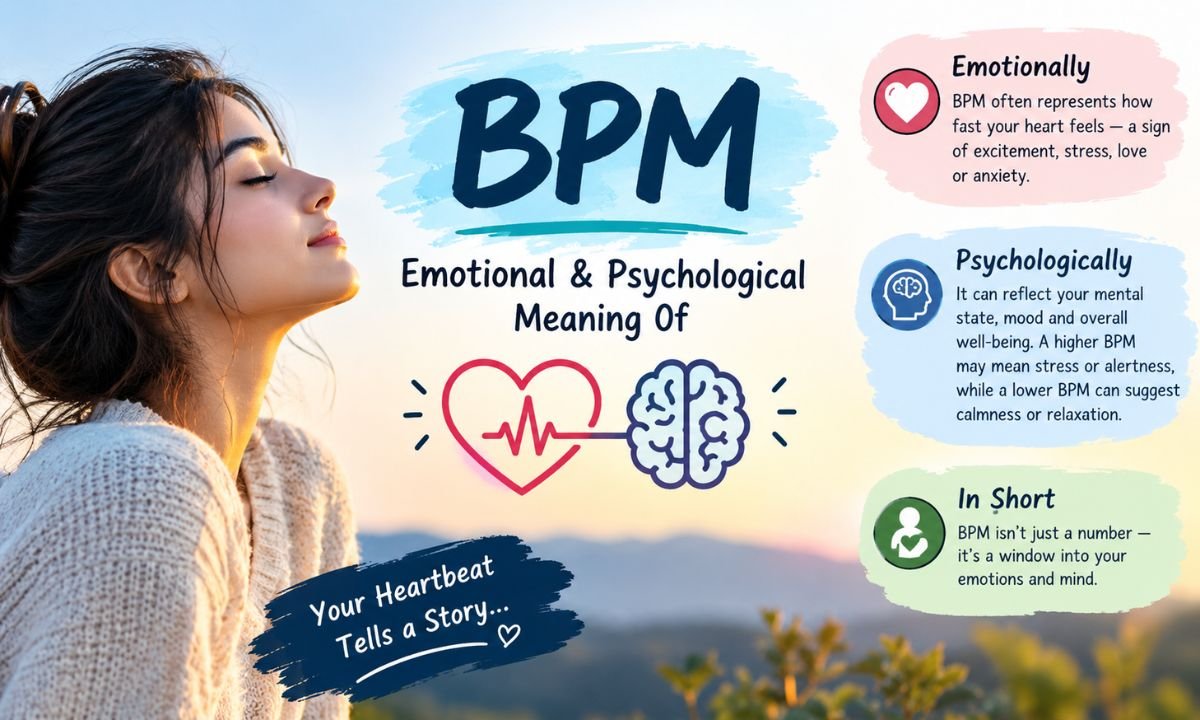
Tempo shapes mood. Slow music often feels calm or sad, while fast music feels energetic or exciting. This is why gyms favor high-tempo playlists and sleep apps choose slow ones.
Heartbeat & Emotion
Your heart rate rises with fear, excitement or stress, and settles when you relax. A racing heart does not always mean danger, but it is a useful signal from your body.
Psychological Identity
Many people connect with a “BPM.” A runner knows their pace, a DJ knows their sweet spot, and a fitness fan knows their resting number. It becomes a small part of personal identity.
Usage in Different Contexts
Social Media
On TikTok and Instagram, creators share BPM for dance, edits and workout tracks. Fitness posts often show heart rate screenshots.
Friends & Relationships
Friends use BPM to compare playlists or running stats. It can also show up as a joke, such as “My heart is at 150 BPM after seeing your text.”
Work & Professional Settings
In healthcare, it means heart rate. In IT and operations, it often means business process management. Spell it out the first time.
Casual vs Serious Tone
- Casual: “This beat is 100 BPM, perfect vibe.”
- Serious: “The patient’s pulse is 110 BPM and needs review.”
Common Misunderstandings
Thinking BPM Only Means Music
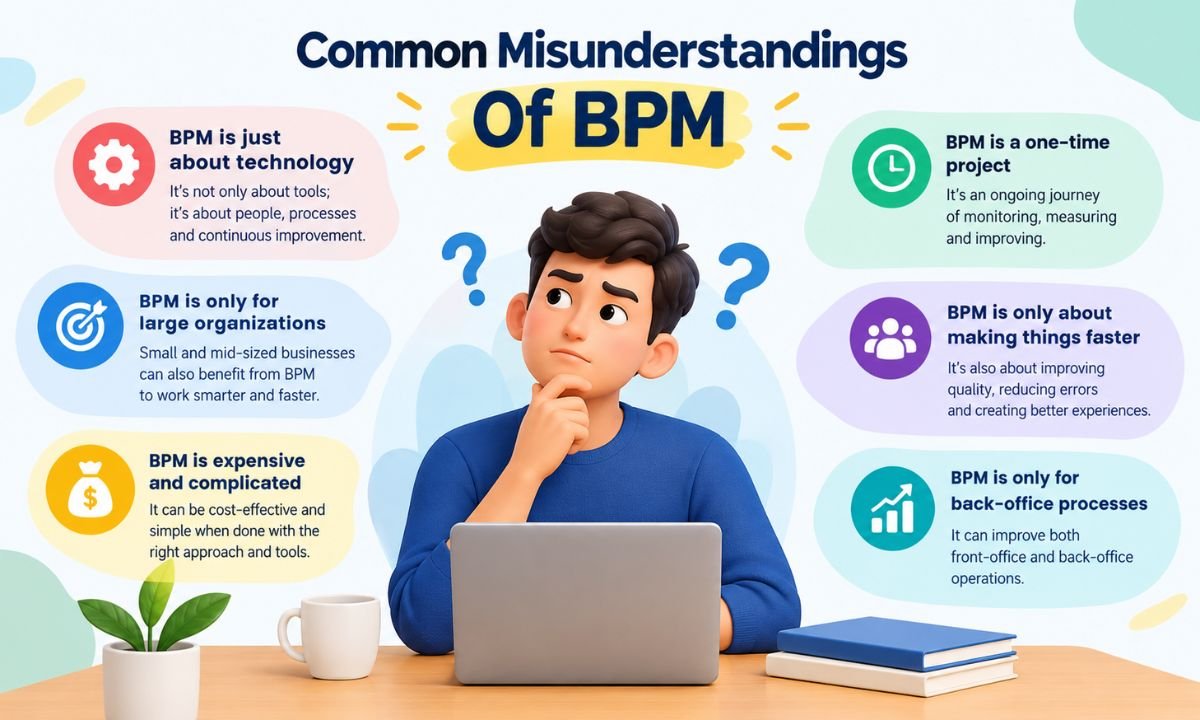
Music is only one use. Health and business use BPM too.
Confusing High BPM as Always Bad
A high BPM during exercise is normal. It only becomes a concern at rest or with symptoms.
Assuming All Songs Need High BPM
Many great songs are slow. Tempo should fit the mood, not chase a number.
Using BPM in Wrong Context
Writing “BPM” in a business email may confuse readers if they expect heart rate. Add a clear label, such as “business process management (BPM).”
Comparison Table
| Context | BPM means | Typical value or use | Example |
| Music | Beats per minute | 60–180+ | “A 120 BPM dance track” |
| Heart rate | Beats per minute | 60–100 at rest (adults) | “Resting pulse is 72 BPM” |
| Pulse monitor | PR (pulse rate) | Same as heart rate | “PR 80 bpm” |
| Business | Business process management | A workflow system | “BPM software for approvals” |
| Breathing | Breaths per minute | Varies | “Slow breathing at 12 bpm” |
Variations / Types of BPM
Resting BPM
Your heart rate when calm and still. Most adults sit between 60 and 100.
Active BPM
Heart rate during exercise. It rises with effort and falls again with rest.
Target BPM
The heart rate zone you aim for during a workout.
Song BPM
The tempo of a track, such as 90 for chill or 130 for upbeat.
Dance BPM
Dance tracks often fall around 120 to 130 BPM, though styles vary.
DJ Transition BPM
DJs match the tempo of two songs so they blend smoothly.
Meditation BPM
Slow, steady music, often around 60 BPM or lower, to support calm.
Running BPM
Music matched to your step rhythm. Many runners prefer songs between 150 and 180.
Business BPM
Short for business process management, used to organize workflows.
Gaming BPM
In rhythm games, the song’s tempo controls how fast notes appear.
More Meanings of BPM
What Is a Normal Pulse Rate for a Woman
For most adult women, the normal resting pulse is 60 to 100 BPM. Women often sit a few beats higher than men, and the rate can rise by roughly 10 to 20 BPM during pregnancy.
BPM Meaning in Software
In software, BPM means business process management. These tools let teams draw a workflow, automate steps, track delays and improve results. Examples include leave approvals, purchase requests and customer onboarding.
Pulse Rate Normal
A normal adult pulse at rest is 60 to 100 BPM, according to the American Heart Association. Highly fit athletes may sit lower, sometimes near 40 to 60.
Normal Heart Rate by Age Women
Adult women generally stay in the 60 to 100 BPM range, with many falling in the 60s to 80s. Rates can shift with fitness, stress, sleep, medicines and pregnancy.
Normal Heart Rate by Age
| Age group | Typical resting heart rate (BPM) |
| Newborn | 100–150 |
| 1–2 years | 80–130 |
| 3–4 years | 80–120 |
| 5–6 years | 75–115 |
| 7–9 years | 70–110 |
| 10 years and older, adults | 60–100 |
BPM Meaning in Heart Rate
It is the number of heartbeats in one minute. A rate above 100 at rest is called tachycardia, and below 60 is called bradycardia. Athletes may be below 60 without any problem.
BPM Meaning in Music
It is the tempo, or speed, of a song. Faster songs have a higher BPM. Producers, DJs and musicians use it to match tracks and keep time.
BPM Meaning in Medical
In medicine, BPM records pulse or sometimes breathing. Doctors compare it to normal ranges, and look at symptoms too, such as dizziness or chest pain.
BPM Meaning in Science
In science, BPM is a rate: how many events happen per minute. Researchers use it for heartbeats, breathing and other cycles in biology and physics.
Health note: This guide is for general information. If your heart rate is often outside the normal range, or you feel unwell, speak to a doctor.
How to Respond When Someone Uses “BPM”
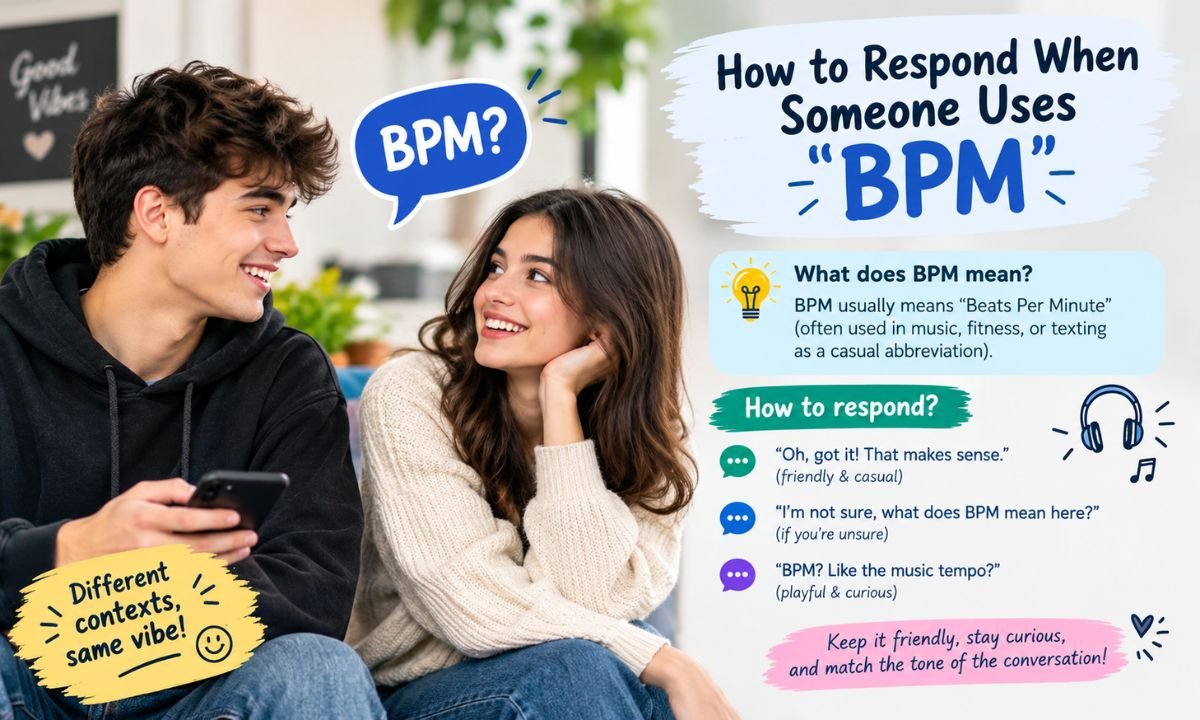
Casual Replies
- “Nice, what BPM is that?”
- “Got it, I’ll check mine too.”
Funny Replies
- “My heart rate goes up when the Wi-Fi drops.”
- “I’m at 40 BPM, mostly sleeping.”
Mature / Confident Replies
- “Thanks for sharing. I’ll compare it with my usual range.”
- “Do you mean heart rate or music tempo?”
Private / Respectful Replies
- “I’m glad you told me. Please check with a doctor if you’re worried.”
- “Thanks for letting me know. I’m here if you want to talk.”
When to Use And When Not to Use BPM
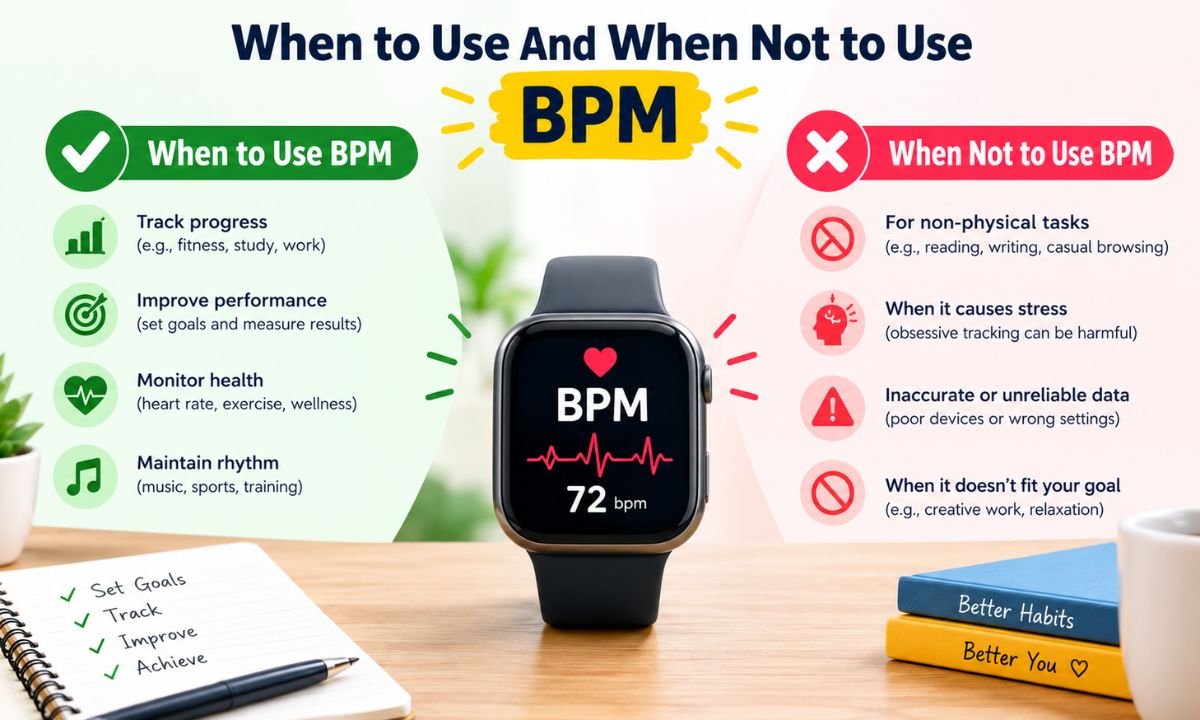
Use BPM when:
- Talking about music tempo
- Sharing a heart rate or fitness stat
- Naming business process management software, with a clear label
- Teaching, training or coaching
Avoid BPM when:
- The reader may not know which meaning you intend
- You want to give medical advice (leave that to a doctor)
- You’re writing formally without explaining the term
- A simple phrase like “heart rate” or “tempo” is clearer
Regional & Cultural Usage
Hard data on regional use is limited, so treat these as general patterns.
Western Culture
BPM is common in fitness, music and tech. Gyms, DJs and software teams use it freely.
Asian Culture
Fitness trackers and music streaming have made BPM familiar across Asia. In business, the term is often seen in enterprise software and process improvement.
Middle Eastern Culture
Younger users know BPM through music apps and smartwatches. Business use appears in banking and large organizations.
Global Internet Usage
Online, BPM is mostly understood as tempo or heart rate. Business meanings need a short explanation.
Frequently Asked Questions
What does BPM mean?
It means beats per minute. It can also mean business process management.
What is a normal BPM for adults?
A normal resting heart rate is 60 to 100 BPM.
What does PR bpm mean?
PR means pulse rate. It shows heartbeats per minute on a health monitor.
What is a normal pulse rate for a woman?
Usually 60 to 100 BPM, often slightly higher than men.
Is a high BPM dangerous?
Not always. It is normal during exercise, but a consistently high resting rate should be checked.
What BPM is the Grinch song?
It varies by version. Many versions sit between about 100 and 145 BPM.
What does BPM mean in software?
Business process management, a system to plan and improve workflows.
How do I find a song’s BPM?
Use a music app, an online BPM finder, or tap along with a metronome tool.
Final Thoughts
BPM is a small acronym with a clear idea: how many beats happen in one minute. In music, it sets the mood. In health, it tracks your heart. In business, it can mean a smarter way to run workflows.
Always check the context before you reply. If a number worries you, talk to a professional. And when you write, use a few extra words to be clear.

The author is a professional content writer specializing in word meanings, definitions, and English vocabulary. With over 6 years of experience in language research and educational content creation, they produce accurate, well-researched, and reader-friendly articles.