
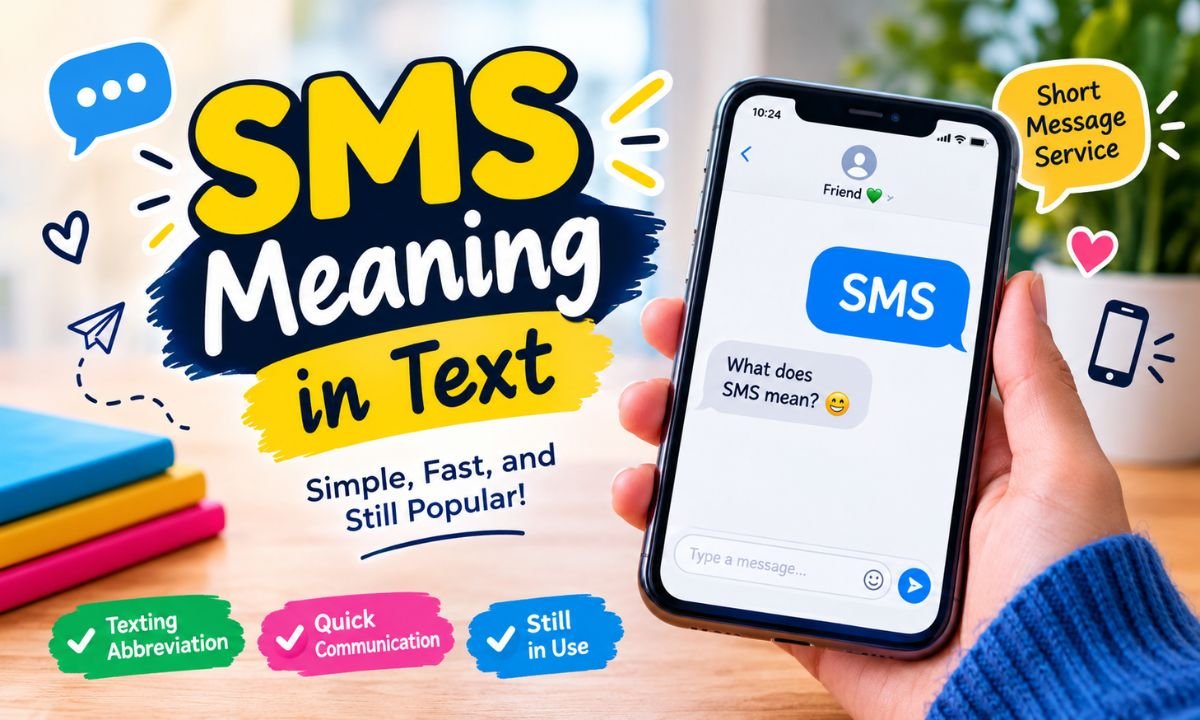
You see “SMS” on your phone bill, in bank alerts, and under green message bubbles. But what does it actually mean? This guide explains the SMS meaning in text in plain words. You will learn the full form, how SMS differs from MMS and iMessage, where people use it, and when to pick something else.
Many people use the word every day without knowing what sits behind it. Some think SMS needs internet. Others think a green bubble means they have been blocked. Neither is true. By the end of this article, you will know what SMS really is, why it still matters after more than 30 years, and how to use it safely.
Quick Answer: SMS Meaning With Examples
SMS stands for Short Message Service. It is the basic text messaging system on mobile phones. It sends short, plain-text messages over your carrier’s network, not over the internet.
Examples:
- “Your code is 482910.” (a verification SMS)
- “Running late, see you at 6.” (a personal SMS)
What Does SMS Mean in Text?
In everyday texting, “SMS” simply means a regular text message. If a friend says “send me an SMS,” they want a normal text, not a chat app message.
It is not slang. It is a technical term that people now use casually. Phones, carriers, and businesses all use it the same way.
What Is the SMS Full Form?
The SMS full form is Short Message Service. A standard SMS holds up to 160 characters. Messages with emoji or some non-English characters hold fewer, so long texts get split into parts.
What Does “Sent as SMS” Mean?
On an iPhone, “Sent as Text Message” means your message went out as SMS or MMS instead of iMessage. The bubble turns green.
This usually happens when the other person uses Android, has no internet, or has iMessage turned off. It does not mean you are blocked.
What Does SMS Stand For?
Each letter has a job:
- S is for Short, because messages are brief.
- M is for Message, the text you send.
- S is for Service, the carrier system that delivers it.
Behind the scenes, a carrier hub called an SMSC stores the message and passes it to the receiver’s phone.
Is SMS Rude, Offensive, or Neutral?
SMS is completely neutral. It is a service name, not a word with attitude. Nobody takes offense at it.
Tone depends on the message, not the label. A short text can feel cold or friendly based on the words and emoji you use.
Where Is SMS Commonly Used?
SMS works on almost every mobile phone, even without data. That is why so many services still rely on it.
Personal Communication
Friends and family use it for quick updates, plans, and photos (photos usually go as MMS).
Verification Codes
Apps send one-time passcodes by SMS to confirm your login or purchase.
Banking Alerts
Banks text you about transactions, low balances, and suspicious activity.
Appointment Reminders
Clinics, salons, and service providers send reminders so people show up on time.
Delivery Notifications
Couriers and online shops text tracking links and delivery windows.
Marketing Messages
Brands send offers and promo codes. In many places, they need your consent first.
Real-Life Examples of SMS Usage
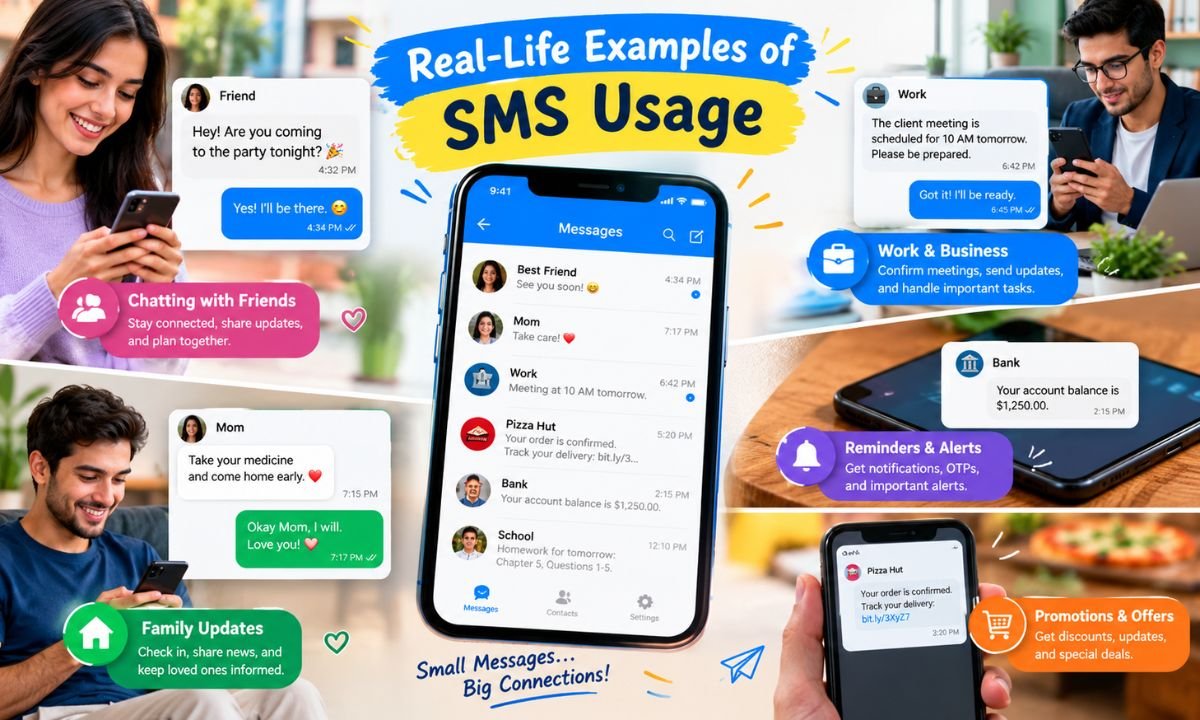
Friendly Example
“Thanks for dinner last night! Let’s do it again soon.”
Casual Example
“Where are you? I’m at the gate.”
Business Example
“Hi Sara, your appointment is tomorrow at 10:30 AM. Reply C to confirm.”
Security Example
“Never share this code with anyone. Your login code is 731402.”
Social Media Example
“Your Instagram code is 295817.” Social apps use SMS to confirm it is really you.
More Meanings of SMS With Examples
Most of the time, SMS means Short Message Service. A few other uses show up.
SMS Meaning MMS
MMS means Multimedia Messaging Service. It carries pictures, audio, and video. Example: “I’ll MMS you the photo.”
What Is SMS on Android?
On Android, SMS is the standard text feature in your Messages app. Many Android phones can also use newer chat features, which need internet. If those are not available, the phone falls back to plain SMS.
SMS Meaning on iPhone
On iPhone, SMS is the green-bubble message. Blue bubbles are iMessages sent over the internet between Apple devices. Green texts are not end-to-end encrypted, while iMessages are.
SMS Meaning in Text From a Girl
There is no secret slang here. If a girl says “I’ll SMS you,” she means she will text you. Read the tone of the full message, not the word itself.
SMS Meaning Maritime
In shipping, SMS means Safety Management System. It is the documented system that a shipping company must keep under the International Safety Management (ISM) Code. This code comes from the International Maritime Organization. Example: “The vessel passed its SMS audit.”
Call SMS Meaning
“Call” means a voice conversation. “SMS” means a written message. You will see both in phone plans (“unlimited calls and SMS”) and in app permissions. Example: “Please call me, don’t SMS.”
Origin and Background of SMS
The idea for SMS came from European mobile standards work in the 1980s. A German engineer, Friedhelm Hillebrand, helped set the 160-character limit. He tested typical sentences and noted that postcards and telex messages were usually short.
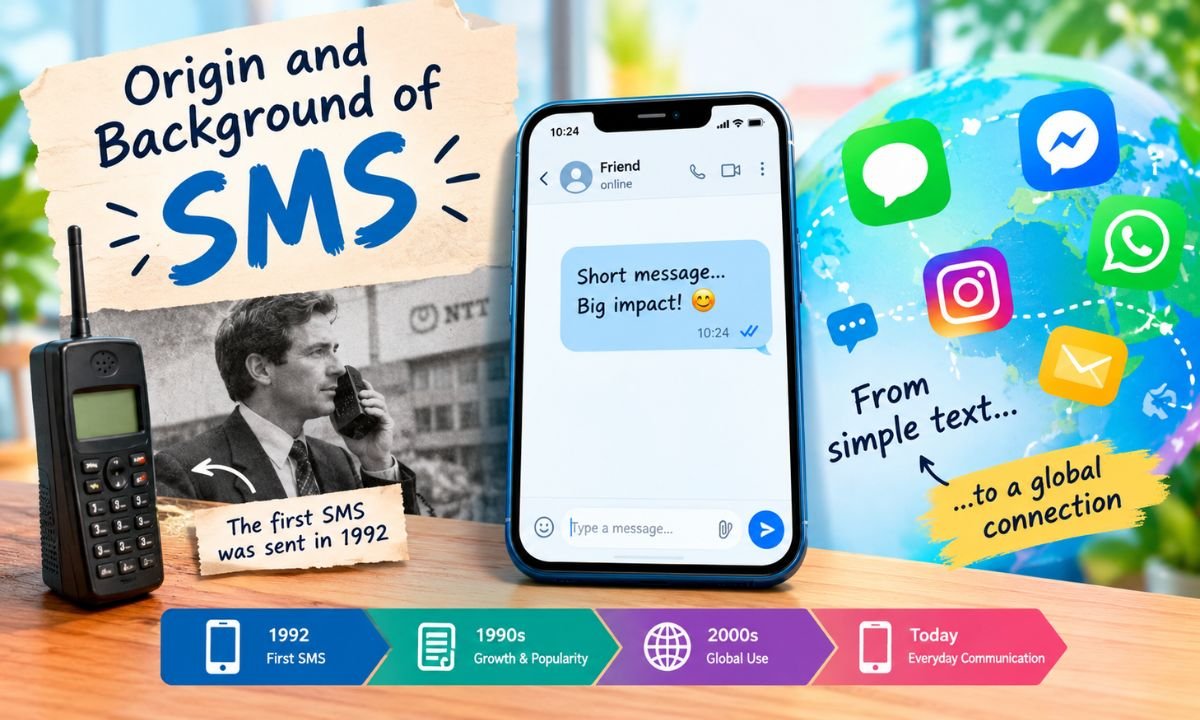
The first SMS was sent on 3 December 1992. Engineer Neil Papworth sent “Merry Christmas” to Richard Jarvis on Vodafone’s UK network. He used a computer, because the phone had no keyboard for it.
SMS then grew into one of the most used phone features in history.
SMS vs Text Message
People use the two terms as if they mean the same thing, and in daily talk they do. Strictly speaking:
- Text message is the everyday word for any short written message.
- SMS is the specific technology that delivers it over the cellular network.
All SMS are text messages. Not all text messages are SMS. A WhatsApp message is a text message, but it is not SMS.
SMS vs MMS
| Feature | SMS | MMS |
| Full form | Short Message Service | Multimedia Messaging Service |
| Content | Plain text | Photos, audio, video, longer text |
| Length | About 160 characters | Much larger |
| Needs data? | No | Often yes |
SMS vs iMessage and Other Chat Services
| Feature | SMS | iMessage | Chat apps (WhatsApp, etc.) |
| Works on | Any mobile phone | Apple devices only | Phones with the app |
| Needs internet | No | Yes | Yes |
| Encryption | No | End-to-end | Often end-to-end |
| Bubble/label | Green | Blue | App-specific |
SMS wins on reach. Chat apps win on features and privacy.
When Should You Use SMS?
- You are reaching someone who may not have the same app.
- You have a weak or no internet signal.
- You are sending a short, time-sensitive note.
- A service requires a code by text.
When Should You Avoid SMS?
- You are sharing passwords, ID numbers, or private documents.
- You need to send large files or videos.
- You are messaging internationally, where fees may apply.
- You want read receipts or typing indicators.
Why Do People Use the Term SMS?
The word is short, official, and clear. Carriers, banks, and apps use it on forms and settings screens, so people picked it up. In some countries, “SMS” is the everyday word for a text, much like “text” is in the US.
Impact of SMS on Communication
SMS made quick, written talk normal. It created text shorthand like “BRB” and “TTYL” because of the 160-character limit. It also gave businesses a direct line to customers.
Today, chat apps carry much of that traffic, yet SMS stays important for alerts, codes, and reaching anyone with a phone.
Is SMS Safe for Social Media?
SMS is not a social media platform. It is a delivery method. Social apps use it to send login codes.
It is convenient, but not the most secure choice. Plain SMS is not end-to-end encrypted, and scammers use fake texts (called smishing) to steal codes. A few safety tips:
- Never share a code with anyone who contacts you first.
- Do not tap unknown links.
- Use an authenticator app instead of SMS codes when possible.
SMS Meaning in Different Contexts
| Context | Meaning |
| Texting | Short Message Service |
| Business | Customer alerts, marketing texts |
| Maritime | Safety Management System |
| Phone plans | Text messages, as opposed to calls |
| iPhone | Green-bubble text |
Common Mistakes About SMS
- Thinking SMS needs internet. Plain SMS uses the cellular network.
- Believing green means blocked. It only means the message went as SMS.
- Assuming SMS is private. It is not end-to-end encrypted.
- Calling every chat message an SMS. App messages are not SMS.
- Sharing OTPs. One-time codes should stay with you.
FAQs:
What does SMS stand for?
SMS stands for Short Message Service.
What does SMS mean in text?
It means a standard text message sent over the mobile network.
What does “sent as SMS” mean?
Your message went out as a regular text instead of iMessage, so the bubble is green.
Is SMS the same as a text message?
In daily use, yes. Technically, SMS is the service that delivers text messages.
Does SMS need internet?
No. It works over your carrier’s cellular network.
What is the difference between SMS and MMS?
SMS carries plain text. MMS carries photos, audio, and video.
Is SMS free?
It depends on your plan. Many plans include it, but international texts may cost extra.
Is SMS secure?
Not very. It is not end-to-end encrypted, so avoid sending sensitive details.
What does SMS mean in maritime?
It means Safety Management System, required under the ISM Code.
How many characters can one SMS hold?
Up to 160 characters in standard encoding, fewer with emoji.
Final Thoughts
SMS means Short Message Service, the simple text system that has linked phones since 1992. It is neutral, widely supported, and still used for alerts, codes, and quick messages. Pick it for reach and reliability, and choose an encrypted app for private talk. Context decides the meaning, so check whether you are in a chat, on a ship, or reading a phone plan.

The author is a professional content writer specializing in word meanings, definitions, and English vocabulary. With over 6 years of experience in language research and educational content creation, they produce accurate, well-researched, and reader-friendly articles.