

Someone just sent you a 💙 and now you’re staring at your screen wondering what it actually means. Is it romantic? Just friendly? A quiet way of saying “I’m here for you”? The blue heart is one of the most misread emojis out there, mostly because it sits in a gray zone between friendship and something more.
This guide breaks down exactly what the blue heart means, how it’s used across different platforms, and how to tell whether the one you just received is romantic, platonic, or somewhere in between.
What Do Blue Hearts Mean in Text?
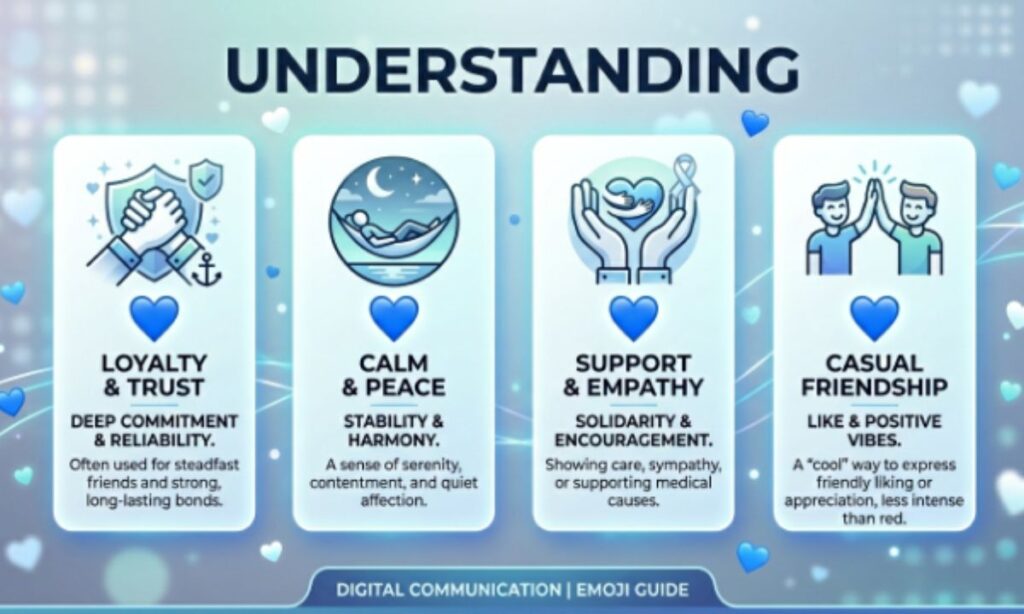
At its core, the 💙 blue heart represents trust, loyalty, calm affection, and platonic love. It’s the emoji people reach for when they want to show care without turning up the romantic intensity of a red heart.
Main Interpretations:
- Trust & Loyalty — a steady, dependable kind of love
- Friendship — affection between close friends without romantic undertones
- Calm/Quiet Support — comfort during a hard time
- Peace and Stability — a settled, non-dramatic emotional tone
- Light Romance — used cautiously in early-stage dating or flirting
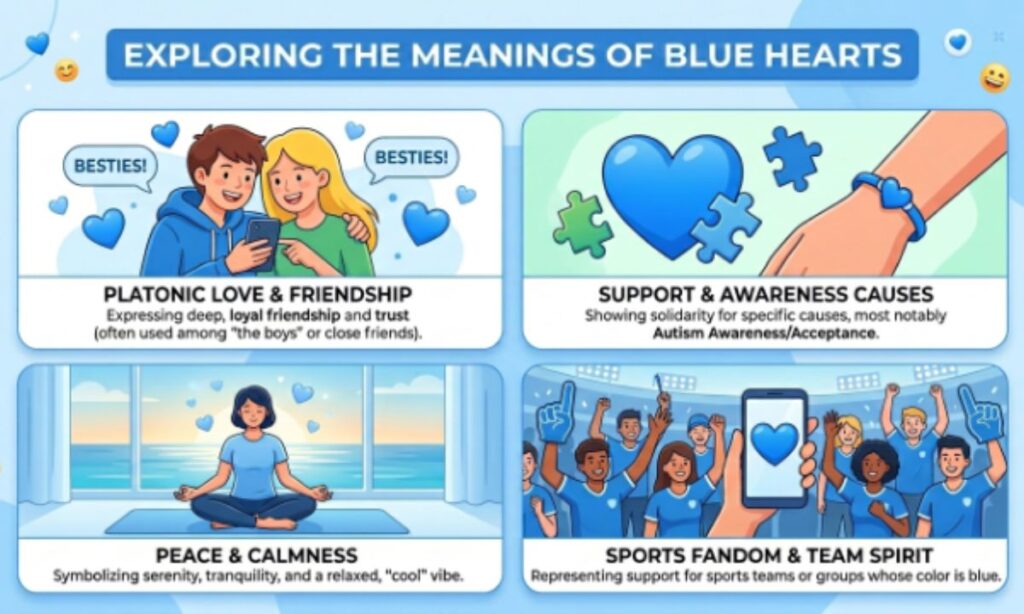
- Awareness Causes — solidarity for autism awareness, mental health, and clean water initiatives
Because it carries so many layers, the real meaning almost always depends on who sent it and the conversation it showed up in.
Where Are Blue Hearts Commonly Used?
Popular Platforms:
- Instagram comments and DMs
- TikTok comment sections
- Snapchat chats
- WhatsApp and SMS
- X (Twitter) replies and fan communities
- Facebook posts and birthday wishes
Tone & Style:
The blue heart reads as:
- Warm but restrained
- Friendly rather than flirty
- Safe to use in most casual conversations
- Common in fan pages, sports communities, and support-based posts
It rarely feels intense the way a red or pink heart does, which is exactly why so many people default to it when they’re unsure how much emotion to show.
Examples of Blue Heart in Conversation
- “Proud of you for finishing that project 💙” — supportive encouragement
- “Missed hanging out with you today 💙” — platonic affection between friends
- “Thinking of you during a tough week 💙” — comfort and empathy
- “Go team!! 💙” — team spirit or fandom loyalty
- “You always know what to say 💙” — light appreciation, possibly early romantic interest
When to Use and When Not to Use Blue Hearts
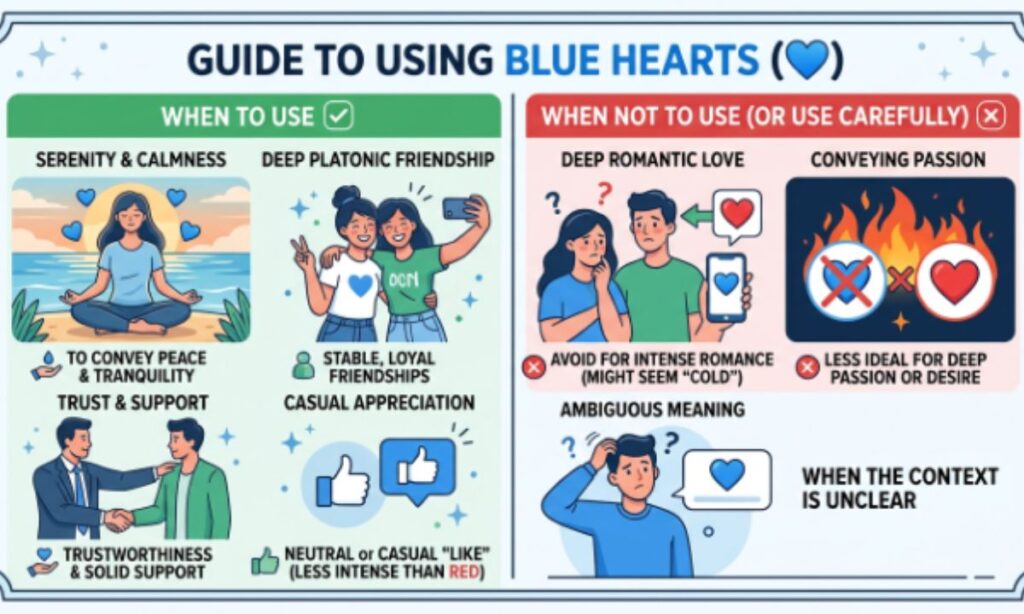
✅ When to Use 💙 Blue Heart
- Comforting a friend going through something difficult
- Supporting a cause, team, or community
- Showing appreciation without romantic pressure
- Wishing someone well on social media
- Early-stage flirting when you want to stay subtle
❌ When Not to Use 💙 Blue Heart
- Expressing deep romantic love (a red heart fits better)
- Responding to a serious, heavy emotional message that needs more warmth
- Formal or professional communication with no emoji tone at all
- When the other person has stated a strong preference for a different heart color between you two
| Situation | Use 💙? | Why |
| Comforting a friend | ✅ Yes | Reads as calm, genuine support |
| Supporting a cause or team | ✅ Yes | Signals loyalty and solidarity |
| Casual appreciation | ✅ Yes | Warm without being intense |
| Early flirting, staying subtle | ✅ Yes | Hints at interest without pressure |
| Declaring deep romantic love | ❌ No | Red heart carries the right intensity |
| Responding to heavy emotional news | ❌ No | Can feel too light for the moment |
| Formal or workplace messages | ❌ No | Emojis generally don’t fit the tone |
| Partner has a different “heart” preference | ❌ No | Risks sending mixed signals |
Other Meanings of Blue Hearts
Blue Heart Emoji Mean
Beyond everyday texting, the blue heart emoji has carried meaning tied to color symbolism for years. Blue is widely associated with calm, dependability, and emotional stability, which is exactly why the emoji feels less intense than red or pink. It’s also historically linked to autism awareness campaigns, where 💙 is used to show solidarity and support.
Blue Heart in Sports and Fandoms
Sports fans and fandom communities frequently use blue hearts to show team loyalty or support for a favorite artist or show, especially when the team or brand’s colors are blue. In these cases, the emoji has nothing to do with romance — it’s pure loyalty and pride.
Blue Heart in Corporate and Brand Messaging
Brands and businesses often use the blue heart in social media captions because it feels neutral, professional, and safe. It communicates warmth and appreciation toward customers without any romantic connotation, which makes it a popular choice for corporate accounts.
Similar Emojis or Alternatives
If 💙 doesn’t quite match the tone you’re going for, these alternatives carry a similar or related feel:
| Emoji | Closest Meaning |
| 🩵 Light Blue Heart | Softer, more playful version of blue heart |
| 💚 Green Heart | Growth, nature, or environmental support |
| 💜 Purple Heart | Compassion, sensitivity, sometimes fandom loyalty |
| 🤍 White Heart | Purity, sympathy, or a fresh start |
| 💛 Yellow Heart | Friendship and happiness |
Why People Use Blue Hearts in Texting
Shows Trust and Loyalty
Blue has long been associated with reliability, which makes the blue heart a natural way to signal “I’ve got your back.”
Works for Friends and Family
Because it avoids heavy romantic weight, it fits naturally into sibling, parent, or close-friend conversations.
Casual & Relatable
It doesn’t demand a big emotional reaction, making it easy to drop into everyday chats.
Social Media-Friendly
Its neutral tone makes it a safe pick for captions, comments, and public posts.
Flexible Tone
It can shift from platonic to lightly romantic depending on the words around it.
Low Risk of Misreading
Compared to a red heart, sending a blue heart is far less likely to create an awkward romantic misunderstanding — which is exactly why it’s a go-to choice with new acquaintances or coworkers.
Popular in Aesthetic and Visual Content
Blue hearts pair well with ocean, sky, and winter-themed content, which has made them a favorite in aesthetic social media posts, especially alongside the newer light blue heart 🩵.
Is the Blue Heart Romantic or Platonic?
This is the question most people are actually trying to answer. The honest truth: it depends entirely on context.
Friendly
Sent between close friends, it usually means appreciation, loyalty, or “I care about you” with zero romantic weight.
Neutral
In group chats, comment sections, or casual replies, it often functions as a generic, low-effort way to show support.
Light Romantic
In early dating or flirty conversations, a blue heart can hint at interest while staying cautious and non-committal — a step below sending a red heart.
Deep Romantic
Less common, but in long-term relationships some couples adopt blue as “their color,” making the heart genuinely romantic between just the two of them.
Comforting
When sent after bad news or a hard day, it reads as quiet emotional support rather than romance or friendship.
Blue Heart Meaning by Sender: Context, Comparisons, and Related Hearts
Blue Heart Meaning from a Girl
When a girl sends 💙, it usually leans platonic — showing appreciation, comfort, or friendship. It can shift romantic only if the surrounding conversation is already flirty.
Blue Heart Meaning in a Relationship
Inside an established relationship, 💙 often signals calm, steady love rather than passion — a reminder of trust and stability between partners.
Blue Heart Meaning from a Guy
From a guy, a blue heart is frequently a safer, less intense alternative to a red heart, often used to show interest without fully committing to a romantic label.
3 Blue Hearts Meaning
Sending 💙💙💙 usually amplifies the same meaning — deeper loyalty, stronger emotional support, or extra emphasis on friendship or team spirit.
Red Heart Meaning
❤️ represents passionate, romantic love and is the most emotionally intense heart emoji, typically reserved for serious romantic feelings.
Blue Heart Emoji
As a standalone symbol, 💙 remains one of the most versatile heart emojis — spanning friendship, loyalty, support, and cautious romance.
Yellow Heart Meaning
💛 generally represents friendship, happiness, and platonic affection, often used between close friends without any romantic undertone at all.
Blue Heart Meaning from a Girl to a Guy
When a girl sends 💙 specifically to a guy, it often signals “I value you as a friend” or subtle interest that hasn’t been confirmed as romantic yet — reading the rest of the conversation is essential here.
Frequently Asked Questions
What does 💙 mean in texting?
💙 generally means trust, loyalty, calm affection, or platonic love, though it can lean lightly romantic depending on context.
What does ❤ 🧡 💛 💚 💙 💜 🖤 mean?
Each color signals a different tone: red is passionate love, orange is warmth, yellow is friendship, green is growth, blue is trust, purple is compassion, and black is grief or dark humor.
What does the 🩵 💙 emoji mean?
Both represent trust and calm affection, but 🩵 feels softer and more playful, while 💙 feels slightly deeper and steadier.
What does color 💛 💙 💜 💚 ❤ mean?
Heart colors follow general color psychology — yellow for friendship, blue for trust, purple for compassion, green for growth, and red for romance.
Does a blue heart mean someone likes you?
It can, but it’s not guaranteed — a blue heart usually signals care or friendship first, with romantic interest only implied through tone and context.
What is the difference between a blue heart and a red heart?
A red heart signals strong romantic passion, while a blue heart signals calmer, more platonic or loyal affection.
Why do people use blue hearts instead of red hearts?
People choose blue hearts to express warmth without romantic pressure, making it a safer choice for friends, coworkers, or early-stage interest.
What does it mean when a guy sends you a blue heart?
It often means he values you and feels comfortable with you, though it usually stops short of declaring full romantic feelings.
Is sending a blue heart considered flirting?
It can be mild flirting in the right context, but on its own, a blue heart is more commonly platonic than flirtatious.
Final Thoughts
The blue heart 💙 is one of the most flexible emojis in modern texting — calm, dependable, and rarely over-the-top. Most of the time, it signals trust, friendship, or quiet support rather than deep romance, but tone, sender, and conversation history all shape its real meaning.
When in doubt, look at the words surrounding the emoji rather than the emoji alone. Context will almost always tell you whether that 💙 was a friendly gesture, a comforting nudge, or the start of something more.

The author is a professional content writer specializing in word meanings, definitions, and English vocabulary. With over 6 years of experience in language research and educational content creation, they produce accurate, well-researched, and reader-friendly articles.