
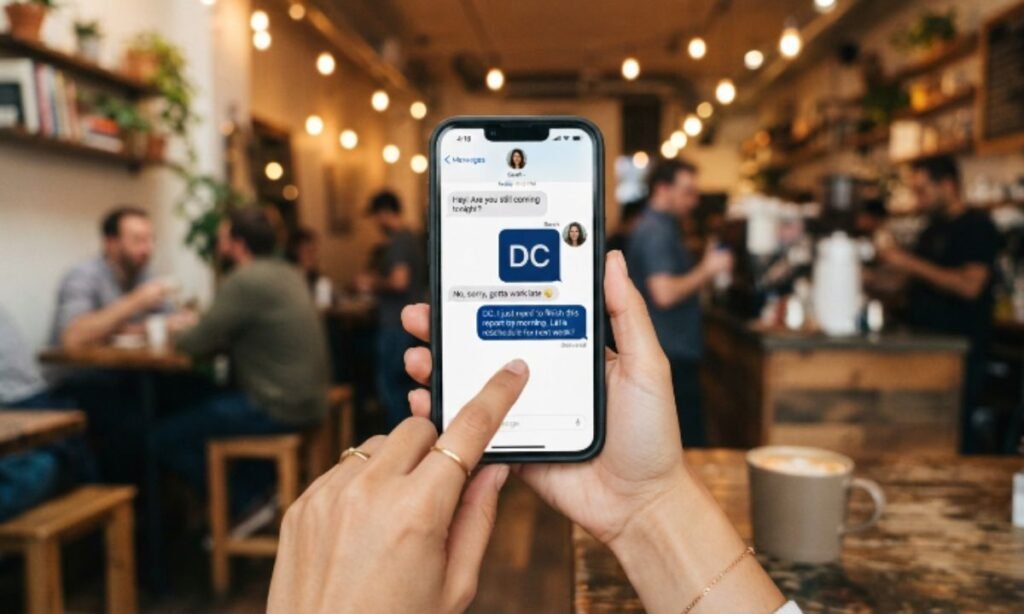
If someone just texted you “dc” and you’re not sure whether they’re annoyed, lost their internet connection, or talking about something else entirely, you’re not alone — “DC” is one of the most context-dependent abbreviations in modern texting. This guide breaks down every common meaning of DC, where each one is used, and how to figure out which one fits the message you actually received.
Meaning & Definition of DC in Text
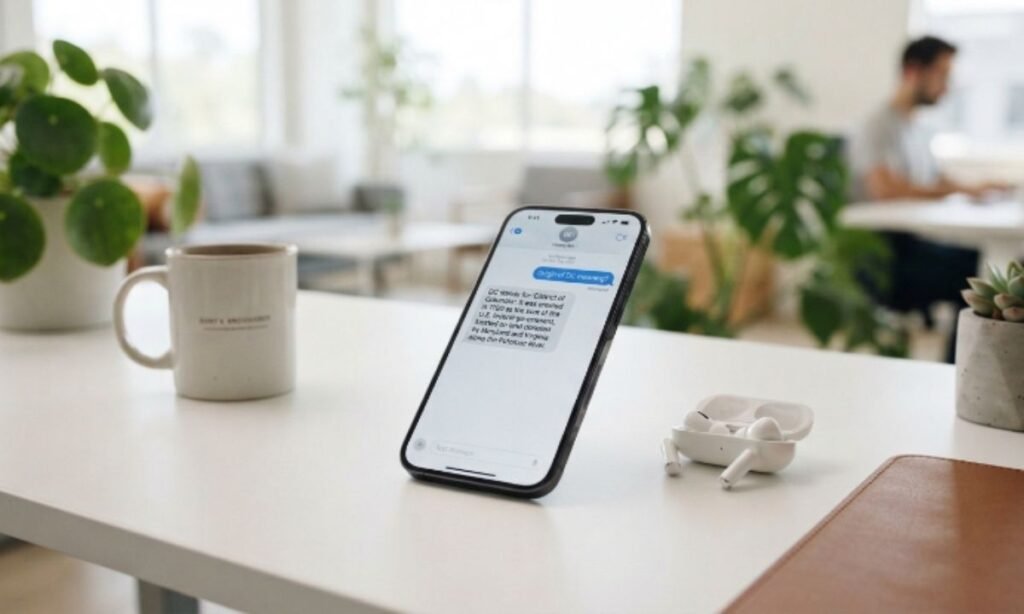
Primary Meaning of DC
In most casual texting and social media use, DC most commonly stands for “don’t care” — a quick, low-effort way to show indifference or a relaxed attitude about a decision. In gaming and voice-call contexts specifically, DC just as commonly means “disconnect” or “disconnected.”
Secondary Meanings of DC
Beyond those two core meanings, DC can also stand for:
- Discord — shorthand for the chat app, especially in gaming communities
- Washington, D.C. — the U.S. capital, used in non-slang contexts
- Direct Current — an electrical engineering term
- DC Comics — the entertainment company behind Batman, Superman, and Wonder Woman
- Dance Credit / Dance Challenge — occasionally used in TikTok captions
Quick Examples
| Message | Likely Meaning |
| “sorry I DC’d mid-game” | Disconnected |
| “idk, dc tbh” | Don’t care |
| “join the DC and we’ll talk” | Discord |
| “flying into DC next week” | Washington, D.C. |
| “circuit runs on DC” | Direct current |
Background & Origin of the Term
How DC Became Popular
DC started as a purely technical and geographic abbreviation long before it became internet slang. Its casual texting use grew out of the natural tendency to shorten common phrases for faster typing, similar to how “don’t care” became “dc” the same way “to be honest” became “tbh.”
Influence of Online Gaming
Multiplayer gaming communities helped cement “disconnect” as one of DC’s most recognized meanings. As voice chats, livestreams, and online matches became everyday activities, players needed a fast way to explain sudden connection drops — and DC filled that role.
Expansion Into Social Media
As platforms like Instagram, TikTok, and WhatsApp grew, the “don’t care” meaning spread from texting into comments and captions, where users adopted it as a quick, casual way to express indifference without typing out a full sentence.
DC Slang Meaning
As slang specifically, DC almost always means one of two things: disconnected (technical/gaming contexts) or don’t care (casual/emotional contexts). Everything else — Discord, D.C., direct current — sits outside slang usage and depends on the topic being discussed rather than tone.
DC Meaning in Text (Funny Uses)
Some of DC’s more lighthearted or meme-driven uses include:
- Reacting to a friend’s dramatic story with a flat “dc” for comedic effect
- Captioning a gaming clip “me when I dc at the worst possible moment” as a running joke about bad luck
- Using “dc” sarcastically to mock someone who’s clearly pretending not to care
Usage in Different Contexts
DC in Casual Chat
Here, DC usually means “don’t care,” often softening a decision: “pizza or tacos?” “dc, you pick.”
DC in Gaming
In gaming chats and voice calls, DC almost always refers to a lost connection: “brb, keep dc’ing.”
DC in Professional Conversations
DC is rarely appropriate in professional messaging. If it appears at all, it’s typically a genuine reference to Washington, D.C., or an electrical/technical term — not slang.
DC in Technology
In tech and electrical contexts, DC specifically means direct current, the steady, one-directional flow of electric charge, as opposed to AC (alternating current).
Meanings Across Social Media Platforms
Mostly used for “don’t care” in casual group chats and one-on-one conversations.
Appears in comments and captions, usually meaning “don’t care,” though occasionally used to tag a Discord server link.
TikTok
Can mean “don’t care,” but also occasionally appears as shorthand for “dance credit,” crediting the original creator of a dance trend.
Snapchat
Typically used the same way as texting — “don’t care” — given Snapchat’s fast, casual messaging style.
Examples in Real Conversations or Memes
Chat Examples
- “wyd tonight?” / “dc, whatever you want to do”
- “why’d you leave the call?” / “sorry, I dc’d, bad wifi”
Meme-Style Examples
- A gaming meme captioned “that feeling when you DC right before the final boss“
- A relatable post captioned “dc energy only” paired with an unbothered expression
Quick Scan Examples
| Context | Sample Text |
| Gaming | “he dc’d twice this match” |
| Casual | “dc lol, do whatever” |
| Discord reference | “link’s in the dc” |
Cultural or Regional Interpretations
South Asian Usage
Among younger texters in India and other South Asian countries, DC is used largely the same way as in the U.S. — most often “don’t care” — picked up primarily through American social media and gaming culture rather than developing a distinct local meaning.
Western Internet Culture
In the U.S. and other Western English-speaking countries, DC’s meaning splits fairly evenly between “don’t care” in casual chat and “disconnect” in gaming, with usage shifting depending on the platform.
Regional Differences
There’s no strong evidence of DC carrying a fundamentally different meaning by region — differences mostly come down to which context (gaming vs. casual chat vs. social media) is more dominant in a given community.
Other Fields Where DC Is Used
Physics & Electricity
DC stands for direct current, describing electrical current that flows in a single, constant direction — used in batteries, solar panels, and many electronics.
Comics & Entertainment
DC is short for DC Comics, the publisher behind Batman, Superman, Wonder Woman, and the broader DC Universe of films and shows.
Medical Meaning
In some clinical and pharmacy contexts, DC can stand for “discontinue,” instructing that a medication or treatment should be stopped — a usage specific to medical charts and prescriptions, not general texting.
Aviation & Technology
DC also appears in aircraft model names (like the historic Douglas DC-3) and in various technical abbreviations across engineering fields, unrelated to texting slang.
Common Misconceptions & Mistakes
Thinking DC Always Means One Thing
The biggest mistake is assuming DC has a single fixed meaning — the correct interpretation depends entirely on the conversation’s topic and platform.
Confusing DC With Discord
While DC is sometimes used as shorthand for Discord, this is far less common than “don’t care” or “disconnect,” and assuming it by default can cause real confusion.
Misreading Tone
Because “don’t care” can sound dismissive in text without vocal tone to soften it, readers sometimes misread genuine indifference as rudeness or anger.
Psychological or Emotional Meaning Behind DC
Emotional Distance
Using “dc” instead of a fuller response can sometimes reflect genuine emotional distance or low investment in a conversation — a quick way to disengage without explaining why.
Frustration in Gaming
In gaming, repeated “dc” messages often carry real frustration, especially when connection issues interrupt matches or teamwork.
Social Identity
For some younger texters, using abbreviations like DC is less about the specific meaning and more about fitting the fast, low-effort communication style common in their peer group.
Similar Terms & Alternatives
- IDC — “I don’t care,” a clearer, more explicit version of DC
- IDK — “I don’t know,” often used alongside DC in indecisive responses
- AFK — “away from keyboard,” used for stepping away rather than losing connection
- Rage Quit — intentionally leaving a game out of frustration, distinct from an unintentional DC
Is DC Offensive or Friendly?
Usually Friendly
In most everyday use, DC is neutral or lighthearted — a shorthand for genuine indifference, not hostility.
Can Sound Rude
Without tone or emojis to soften it, “dc” can come across as dismissive in emotionally sensitive conversations, even if that’s not the intent.
Context Changes Everything
The same word can read as playful between close friends and cold in a more serious or unfamiliar conversation — context and relationship matter more than the abbreviation itself.
Grammar or Linguistic Insights
DC as an Abbreviation
DC functions as an initialism, formed from the first letters of a longer phrase, similar to other texting shorthand like “tbh” or “idk.”
Verb Usage
In gaming contexts, DC is often used as a verb: “he dc’d” or “I keep dc’ing,” bending the abbreviation into standard verb tenses despite its informal origin.
Informal Communication
DC belongs firmly to informal, conversational writing — it’s not appropriate in formal emails, professional messaging, or academic contexts.
How to Respond to DC
If Someone Means “Disconnect”
A simple, supportive reply works best: “no worries, join back when you can.”
If Someone Means “Don’t Care”
Match their tone — a casual “okay, I’ll decide then” keeps the conversation moving without over-explaining.
Chat-Style Examples
- “sorry I dc’d” → “all good, we waited for you”
- “dc, your call” → “cool, going with option two then”
Differences From Similar Words
DC vs IDC
IDC (“I don’t care”) is more explicit and less ambiguous than DC, which can also mean disconnect depending on context.
DC vs AFK
AFK means someone is intentionally stepping away, while DC means they’ve lost connection unintentionally, usually due to technical issues.
DC vs Rage Quit
A rage quit is a deliberate exit driven by frustration, while a DC is typically accidental and tied to connectivity problems.
Relevance in Online Conversations & Dating Apps
Online Chats
DC remains common in general messaging as a fast way to express indifference on low-stakes decisions.
Dating Apps
DC appears less frequently here, since expressing genuine indifference can come across poorly in a context built around showing interest — most users opt for softer phrasing instead.
Popularity & Trends Over Time
Growth Through Gaming
The “disconnect” meaning grew steadily alongside the rise of online multiplayer gaming and voice chat platforms over the past two decades.
Rise on Social Media
The “don’t care” meaning expanded significantly as short-form platforms like TikTok and Instagram normalized quick, low-effort abbreviations in comments and captions.
Google Search Interest
Searches for “DC meaning in text” tend to spike whenever a term goes viral in a specific context (a popular gaming clip, a trending TikTok caption), reflecting how often people encounter the abbreviation without immediate context.
Frequently Asked Questions
What does DC mean in texting?
DC most commonly means “don’t care” in casual texting, or “disconnected” in gaming and call-related contexts, depending on the conversation.
What does DC mean on social media?
On platforms like Instagram, TikTok, and Snapchat, DC usually means “don’t care,” though it can occasionally reference Discord or a dance-related credit on TikTok.
What is DC short for online?
Online, DC is most often short for “don’t care” or “disconnect,” though it can also stand for Discord depending on the community.
What does DC slang mean?
As slang, DC typically expresses indifference (“don’t care”) or describes a lost connection (“disconnected”), with the correct meaning depending entirely on context.
Is DC the same as IDC?
Not exactly — IDC directly spells out “I don’t care” and is less ambiguous, while DC can carry multiple meanings depending on the situation.
Why do people use DC instead of writing it out?
Like most texting abbreviations, DC saves time and effort while still communicating clearly enough within a familiar context, especially in fast-paced chats or gaming sessions.
Does DC mean Discord?
Sometimes — DC is occasionally used as shorthand for Discord, especially in gaming communities, but it’s less common than “don’t care” or “disconnected.”
Final Thoughts
DC is a small abbreviation carrying a surprisingly large range of meanings, from a shrug of indifference to a dropped gaming connection to the U.S. capital itself. The fastest way to read it correctly is simple: look at the platform, the topic, and the tone of the conversation around it. Once you know what to look for, DC stops being confusing and becomes just another piece of everyday digital shorthand.

The author is a professional content writer specializing in word meanings, definitions, and English vocabulary. With over 6 years of experience in language research and educational content creation, they produce accurate, well-researched, and reader-friendly articles.