
If you’ve scrolled through a group chat or comment section lately, chances are you’ve spotted the word ion sitting where a full sentence should be. No punctuation, no caps, just three letters — and somehow everyone else in the conversation understood it instantly.
So, what does ION mean, really? In almost every texting situation, ION is a fast, casual way of saying “I don’t.” It’s part of a wave of internet shorthand that favors speed and personality over textbook grammar, and once you learn it, you’ll start noticing it everywhere — from Instagram captions to Snapchat replies.
This guide breaks down the ION meaning in plain language, shows you real examples, compares how it’s used across different apps, and answers the most common questions people search for. By the end, you’ll be able to read, use, and reply to ION like a native texter.
What Does ION Mean in Text?
In texting slang, ION stands for “I don’t.” It’s a phonetic spelling — when people say “I don’t” quickly out loud, it often blends together and sounds like “ion.” Over time, that pronunciation made its way into how people actually type.
The core idea behind ION is simple: it removes the apostrophe and extra letters to keep messages short. Instead of typing “I don’t know,” someone might just type “ion know.” The meaning doesn’t change — only the speed and tone do.
A few quick things to remember about the ION meaning:
- It usually appears at the start of a sentence, replacing “I don’t.”
- It’s almost always written in lowercase, matching the relaxed tone of casual chat.
- The word can occasionally be confused with the science term “ion” (a charged atom), but context makes the difference obvious within seconds.
- It’s most common in casual, informal conversations, not professional writing.
If a message doesn’t make sense with the chemistry meaning, it’s almost certainly the slang version.
Where Is ION Commonly Used?
ION thrives in spaces built for speed and informality. You’ll see this slang most often in text messages, DMs, comment sections, and group chats among friends.
Common places ION shows up include:
- Text message threads between friends or partners
- Comments and captions on social media
- Group chats and casual online communities
- Gaming chats and Discord servers
- Reply threads on short-form video apps
It’s rarely used in emails, resumes, work Slack channels, or anywhere formality matters. The golden rule is simple: if you wouldn’t say “I don’t” out loud in that setting, don’t type “ion” either.
Examples of ION in Conversation
Seeing ION in real conversation makes the meaning click much faster than any definition alone. Here are a few natural examples:
- “ion know what to wear tonight” → I don’t know what to wear tonight
- “ion care what they think” → I don’t care what they think
- “ion feel like going out today” → I don’t feel like going out today
- “ion think that’s true tbh” → I don’t think that’s true, to be honest
- “ion want pizza again lol” → I don’t want pizza again, lol
A quick conversation might look like this:
Person A: “You coming to the party tonight?” Person B: “ion think so, I’m tired 😴”
Here, ION replaces “I don’t” smoothly, keeping the reply short without losing any meaning. This is exactly why the slang spread so fast — it fits the natural rhythm of how people actually talk.
ION Meaning Across the Platforms
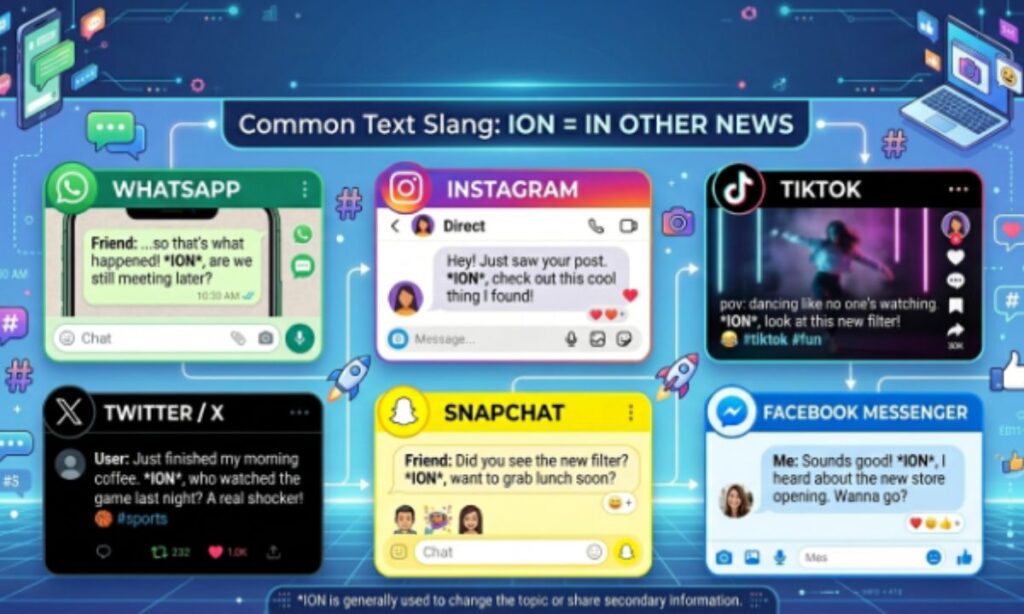
The ION meaning stays the same everywhere, but how often it shows up — and how it’s styled — changes slightly depending on the platform.
On WhatsApp, ION usually appears in one-on-one chats or small friend groups. Since WhatsApp conversations tend to be more personal, ION here often carries a relaxed, “just between us” tone, like “ion trust that guy.”
Snapchat
Snapchat is one of the biggest homes for ION. Messages disappear quickly, so users lean into short slang to keep pace. You’ll often see it paired with emojis, like “ion feel like snapping today 😴.”
On Instagram, ION shows up heavily in comments, captions, and DMs. It’s common under posts where someone is reacting casually, such as “ion know how she does it every time.”
On Twitter (X), ION is extremely popular because of the character limit. Short slang like this helps users express a full thought without wasting space, especially in reply threads and quote tweets.
Facebook and YouTube
On Facebook and YouTube, ION appears mostly in comment sections rather than direct messages, often used by younger users replying to posts or videos in a casual, conversational tone.
When to Use and When Not to Use ION
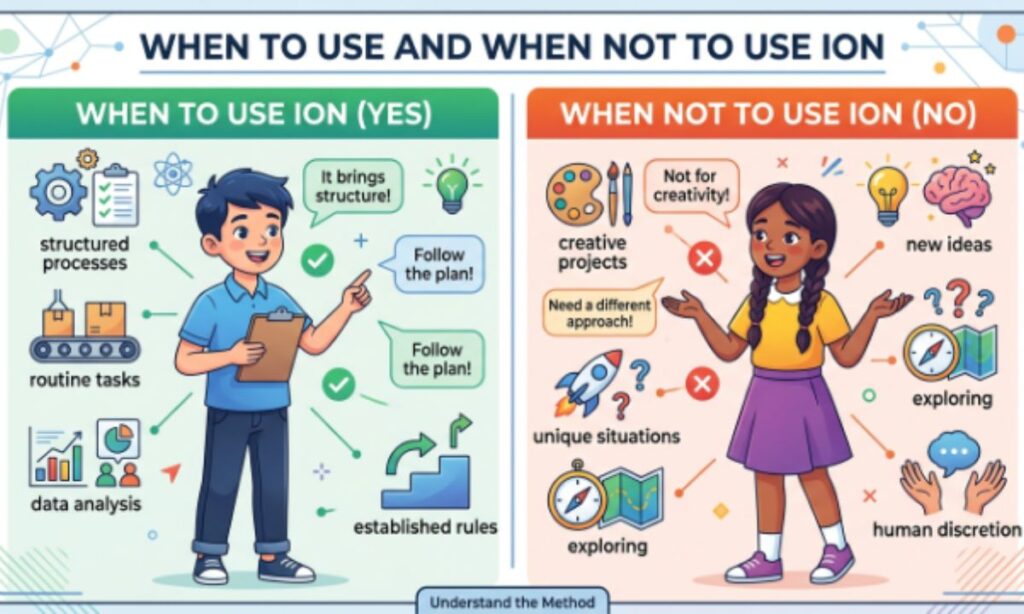
Knowing the ION meaning is only half the job — knowing when it’s appropriate is what actually prevents awkward moments.
When to Use ION
- Texting friends, siblings, or close peers
- Casual social media comments and captions
- Group chats with an informal tone
- Light, playful conversations where formality isn’t expected
When Not to Use ION
- Emails to teachers, professors, or managers
- Job applications, resumes, or cover letters
- Formal or professional messaging apps like work Slack or Teams
- First conversations with people you don’t know well, especially in serious contexts
Using ION in the wrong setting can come across as careless or overly casual, even if that’s not the intention. When in doubt, spell it out as “I don’t.”
Context Comparison Table
| Situation | Should You Use ION? | Why |
| Texting a close friend | Yes | Casual, familiar tone fits perfectly |
| Instagram comment on a friend’s post | Yes | Matches the platform’s informal style |
| Group chat with classmates | Yes | Fast, natural, widely understood |
| Email to a teacher or boss | No | Reads as unprofessional |
| Formal report or business message | No | Breaks the expected tone completely |
| Texting someone you just met professionally | No | Risk of seeming careless |
Similar Slang Words or Alternatives

ION isn’t the only shortcut people use to express “I don’t” or similar ideas quickly. Here are related terms and variations worth knowing.
What Does ION Mean in Slang?
In slang, ION almost always means “I don’t.” It’s built the same way many modern abbreviations are — by writing words the way they sound when spoken fast, rather than how they’re spelled formally. Similar slang terms include IDK (“I don’t know”), IDC (“I don’t care”), and finna (“going to”).
ION Meaning in Gen Z
Among Gen Z, ION meaning goes slightly beyond a simple contraction — it’s part of a whole texting style built around speed, personality, and low effort. Gen Z users often pair ION with emojis or follow-up slang like “tbh” or “fr” to add extra tone, such as “ion really feel like it fr fr.”
ION Meaning in Human Body
Outside of texting, “ion” has a completely different, scientific meaning. In biology and chemistry, an ion is an atom or molecule that has gained or lost an electron, giving it an electrical charge. Ions play an essential role in the human body — for example, sodium, potassium, and calcium ions help nerves send signals and muscles contract. This meaning has nothing to do with the slang version; context is what tells the two apart instantly.
Frequently Asked Questions
What does ION mean in a text message?
ION is texting slang for “I don’t.” It’s a fast, phonetic way of writing the phrase, commonly used in casual conversations.
Is ION a rude word?
No, ION isn’t rude by itself. It’s simply informal, and its tone depends entirely on the rest of the message and context.
What does ION mean on Snapchat?
On Snapchat, ION has the same meaning as everywhere else — “I don’t.” It’s especially popular there because of the app’s fast, casual messaging style.
Does ION always mean “I don’t”?
In texting, yes, ION almost always means “I don’t.” Rarely, depending on context, it can informally lean toward “I know” or “I’m on,” but this is far less common.
Can I use ION in professional messages?
No, it’s best to avoid ION in professional or formal writing. Spell out “I don’t” instead to keep the tone appropriate.
Where did the slang ION come from?
ION comes from spoken English, where “I don’t” said quickly sounds like “ion.” It spread through African American Vernacular English (AAVE) before becoming mainstream on social media.
What’s the difference between ION the slang and ion the science term?
The slang ION means “I don’t,” while the science term “ion” refers to a charged atom or molecule. Context always makes it clear which one is being used.
Final Thoughts
At its core, the ION meaning is refreshingly simple: it’s just a quick, casual way of saying “I don’t.” What makes it interesting is how naturally it fits into modern digital conversation — fast, expressive, and full of personality, without losing any clarity.
Now that you understand what ION means, where it’s commonly used, and when to avoid it, you’ll never have to pause and guess again. Whether you’re replying on Snapchat, commenting on Instagram, or just decoding a friend’s text, you’ll know exactly what’s being said — and you can use it confidently yourself, in the right moment.

The author is a professional content writer specializing in word meanings, definitions, and English vocabulary. With over 6 years of experience in language research and educational content creation, they produce accurate, well-researched, and reader-friendly articles.