
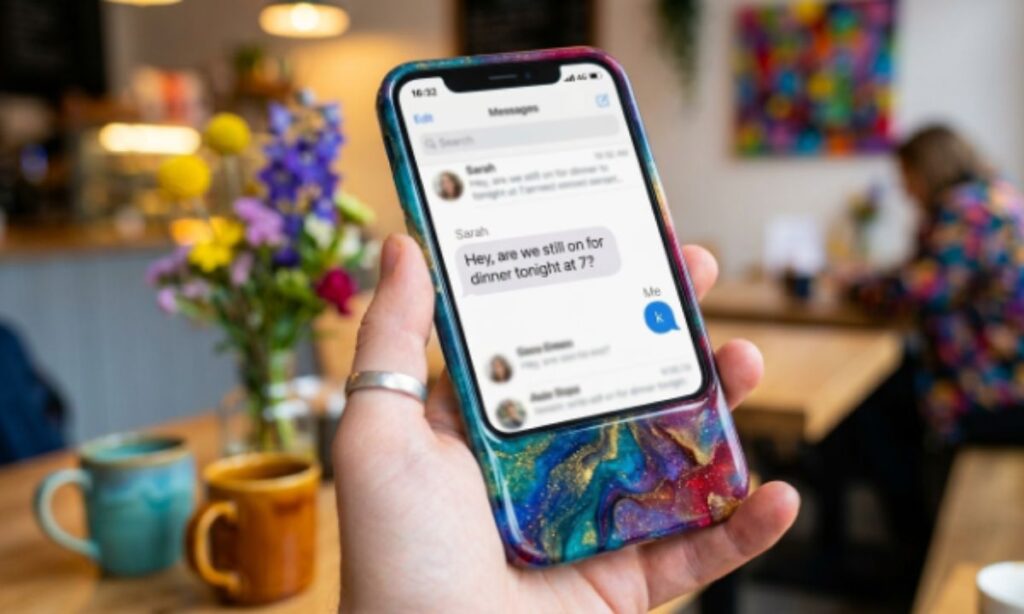
You send a paragraph explaining your whole day, and you get back one letter: “K.” No punctuation, no emoji, nothing. Your brain immediately starts spiraling — are they mad? bored? busy?
Here’s the short answer: in almost every case, “K” simply means “okay.” It’s the shortest possible way to confirm a message was received. The confusion isn’t about what the letter stands for — it’s about tone, and tone in texting comes from context, not the word itself.
This guide breaks down exactly what “K” means, where it came from, how it shifts across platforms and relationships, and how to respond to it without overthinking.
Meaning & Definition of K in Text
Primary Meaning of “K”
“K” is a one-letter abbreviation of “OK” or “okay.” It’s used to acknowledge a message, confirm a plan, or signal agreement — nothing more, nothing less, in its default form.
Secondary Meanings of “K”
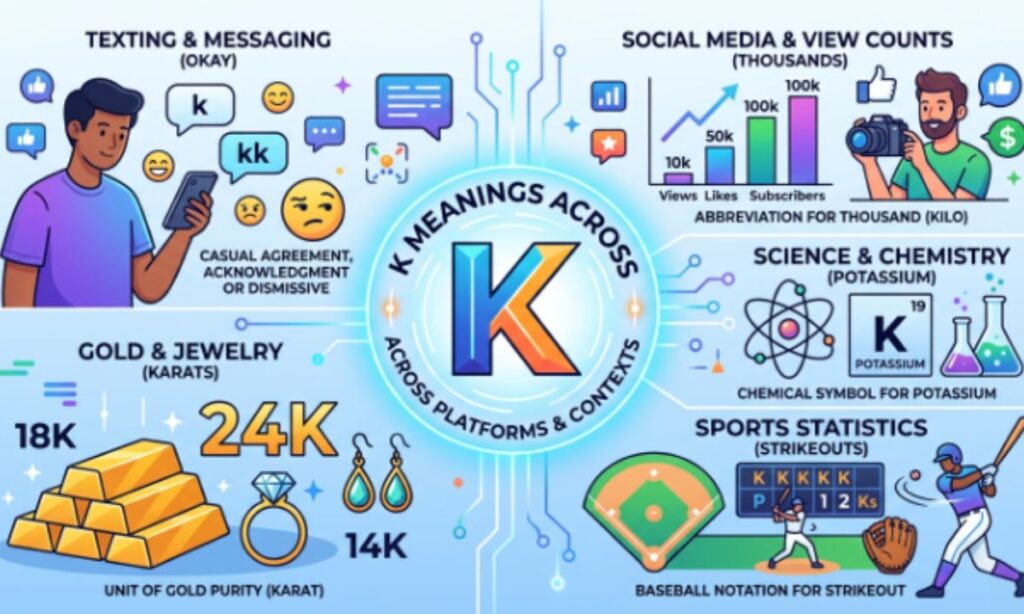
Depending on context, “K” can also imply:
- A neutral, low-effort acknowledgment (“got it, moving on”)
- Mild annoyance or disinterest, especially when it replaces a longer expected reply
- A conversation-ender, used when someone wants to close a topic
- Outside of texting slang, “K” is also shorthand for thousand (as in “50K”), and the chemical symbol or scientific abbreviation for potassium, kelvin, and other technical terms covered later in this guide
Why Tone Matters
A single letter carries no vocal inflection, facial expression, or punctuation to soften it. That absence is exactly why “K” gets over-interpreted. The same “K” can read as friendly or cold depending on:
- The relationship between sender and recipient
- What was said right before it
- Whether it’s capitalized
- Whether punctuation (like a period) is added
- The platform and typical texting habits of that person
Background & Origin of K
Where Did “K” Come From?
“K” is a natural shortening of “OK,” a term with disputed but well-documented origins in 1830s American newspaper slang, where playful misspelled abbreviations (like “oll korrect”) were briefly fashionable. “OK” survived and became one of the most recognized words in the English language.
Connection Between “OK” and “K”
As texting emerged in the late 1990s and early 2000s — when phones required multiple key presses per letter — users trimmed “okay” to “ok,” and eventually to a single tap: “k.” It was purely about speed and character limits, not tone.
Internet Culture Influence
Instant messaging platforms (AIM, MSN Messenger) and later SMS and smartphone chat apps normalized ultra-short replies. As texting shifted from a novelty to the primary way people communicate daily, single-word and single-letter replies started carrying more emotional weight, since they now stood in contrast to the fuller, more expressive texting styles most people use with friends and partners.
Usage in Different Contexts
Casual Chats
Between friends, “K” is usually neutral and efficient — a fast acknowledgment with no hidden meaning, especially in ongoing, informal group chats.
Romantic Conversations
This is where “K” gets scrutinized most. In a relationship, a bare “K” after an emotional or important message can feel dismissive, even if the sender didn’t mean it that way. Context (recent conflict, timing, and usual texting style) matters more than the letter itself.
Workplace Communication
In professional settings, “K” is often seen as too casual or curt. “Okay,” “Got it,” or “Sounds good” are generally safer choices when replying to managers, clients, or colleagues you don’t text informally.
Gaming Communities
In gaming chats and voice-adjacent text (Discord, in-game chat), “K” is almost always neutral and fast — used constantly to confirm strategy calls, invites, or instructions without slowing down gameplay.
Meanings Across Platforms
The core meaning of “K” doesn’t change by platform, but the expected norm does.
Common as a quick read-receipt-style reply. Since WhatsApp shows read status, a lone “K” after a long delay can feel more pointed.
Used in DMs similarly to texting — casual and quick, often paired with emojis to soften tone when needed.
TikTok
In comments and DMs, “K” is frequently used sarcastically or dismissively as part of meme culture (see below).
Snapchat
Because Snapchat conversations move fast and disappear, “K” is typically just a fast acknowledgment rather than a loaded response.
Discord & Gaming Apps
Extremely common and rarely seen as rude — brevity is the norm in fast-moving group and voice-linked chats.
Examples in Real Conversations or Memes
Friendly Examples
- “Meet you at 7?” → “K see you then!”
- “I sent the file” → “K thanks 🙌”
Annoyed Examples
- “I really think we should talk about this.” → “K.”
- “Sorry I’m running late.” → “K.” (no emoji, long pause before)
Meme Culture
“K” has become internet shorthand for exaggerated bluntness or comedic passive-aggression — memes often show a wall of text followed by a lone “K” to represent a joke about someone being “done” with a conversation.
Cultural or Regional Interpretations
Western Internet Culture
In the US, UK, and Australia, “K” alone (especially with a period, “K.”) is widely recognized as a potential signal of irritation, largely because of years of meme culture and dating-advice content reinforcing that association.
South Asian Usage
In much of South Asia, “K” is more commonly used as a purely functional acknowledgment without the same cultural baggage around passive aggression — tone cues tend to come more from surrounding words or emojis than the letter itself.
Younger vs Older Users
Younger, terminally-online users are more likely to read subtext into a bare “K,” having grown up with meme culture reinforcing that interpretation. Older users, or those less immersed in texting-etiquette content, more often use it at face value.
Other Fields: Technical Meanings of K
Physics
“K” represents the kelvin, the SI base unit of thermodynamic temperature.
Mathematics
In math and statistics, “k” commonly denotes a constant, a variable, or is used in formulas like K-means clustering (an algorithm used to group data points — more on this in the FAQ).
Medical Field
In blood tests and clinical contexts, “K” is the standard abbreviation for potassium, an essential electrolyte.
Technology
“K” is shorthand for 1,000 (kilo-), used constantly in tech contexts — file sizes (4K resolution), follower counts (10K), and salaries (60K).
Common Misconceptions & Mistakes
Misconception 1: “K” Always Means Anger
False. Most of the time, it’s simply efficient. Anger is read into it based on context, not guaranteed by the letter itself.
Misconception 2: Capital “K” Is Always Rude
Capitalization habits vary by person — some people capitalize every message by default (autocorrect, typing style), which has nothing to do with tone.
Misconception 3: “K” Ends Relationships
A single text can’t end a relationship. It might reflect frustration in the moment, but the underlying issue — not the letter — is what actually needs addressing.
Common Mistakes
- Reading a one-word reply the same way regardless of who sent it
- Ignoring the messages that came before the “K”
- Assuming digital tone equals spoken tone
- Overreacting instead of simply asking, “Hey, everything okay?”
Psychological or Emotional Meaning Behind It
Humans are wired to search for emotional cues, and text strips most of them away. When a message is short, our brains tend to fill in the emotional gap — often with the worst-case interpretation, a pattern sometimes called “text anxiety” or negativity bias in digital communication. A bare “K” isn’t inherently loaded; it becomes loaded when the recipient is already anxious, expecting conflict, or comparing it to that person’s usual, longer texting style.
Similar Terms & Alternatives
| Term | Typical Tone |
| K | Neutral to slightly cold, depending on context |
| Kk | Friendly, casual, low-stakes |
| Okay | Neutral, safe for most situations |
| Ok | Slightly more casual than “Okay” |
| Sure | Can sound reluctant or agreeable, depending on context |
| Got it | Clear, professional, low ambiguity |
| Sounds good | Warm, enthusiastic, workplace-friendly |
Is It Offensive or Friendly?
Friendly Use
Paired with emojis, exclamation points, or as part of an otherwise warm conversation, “K” reads as completely friendly and low-effort in a good way.
Negative Use
Sent alone, with a period, after a long pause, or in place of an expected fuller response, it can come across as dismissive — intentionally or not.
Famous Quotes or Lines Using the Term
“K” doesn’t have notable attributed quotations from public figures in the traditional sense — its cultural weight comes from internet meme culture and everyday texting habits rather than any single famous line, so this section is best represented through the meme examples above rather than fabricated quotes.
Grammar or Linguistic Insights
Linguists who study digital communication (such as internet linguist Gretchen McCulloch) have pointed out that punctuation and capitalization function as tone markers online the way vocal inflection does in speech. A period after “K” can read as more “final” or serious simply because periods are used less often in casual texting, making their presence feel deliberate.
How to Respond to K
Friendly Responses
- “Kk 👍”
- “Perfect, see you then!”
- “Got it, thanks!”
If It Feels Cold
- Don’t assume the worst — ask directly: “Hey, is everything okay?”
- Give it time; not every short reply is a signal
- Avoid mirroring frustration back with your own curt reply
Chat-Style Examples
Neutral: “Leaving now” → “K” Warm: “Leaving now!” → “K yay see you soon 😊” Tense: “We need to talk when you’re free.” → “K.”
Differences From Similar Words
K vs OK
“OK” is the full standard form; “K” is its clipped, faster version with a slightly more casual (or occasionally colder) feel.
K vs kk
“Kk” tends to read as friendlier and more enthusiastic than a single “K,” almost like a verbal nod.
K vs Okay
“Okay” is the safest, most neutral option — least likely to be misread in serious or professional contexts.
K vs Sure
“Sure” can imply reluctant agreement (“sure, whatever”), while “K” is more purely an acknowledgment.
K Meaning in Text From a Girl
There’s no universal rule tied to gender — a “K” from a girl carries the same range of meanings as from anyone else: acknowledgment, mild disinterest, or simple brevity. What matters is her typical texting style and the context of the conversation, not a gendered interpretation.
K Meaning in Text From a Guy
Similarly, a “K” from a guy is most often just efficient communication rather than a deliberate cold shoulder. Some texting-advice content over-assigns meaning based on gender; the more reliable signal is always the surrounding conversation.
What Does K Mean in Hood Slang
In hood or urban slang, “K” is still generally short for “okay,” but tone can shift toward casual agreement, calm acceptance, or nonchalance (“bet,” “aight,” and “K” often function similarly) — used to keep a conversation moving without unnecessary words.
K Meaning in Numbers
Outside of texting, “K” is a standard numerical abbreviation for 1,000 (from “kilo”). For example, “$5K” means $5,000, and “10K followers” means 10,000 followers.
K Meaning in Love
In a romantic context, “K” carries more emotional weight simply because expectations are higher — partners often read more into short replies than they would from a casual acquaintance. It can still mean plain agreement, but it’s also the most common place where a “K” gets flagged as passive-aggressive, cold, or a sign of unresolved tension.
Relevance in Online Conversations & Dating Apps
On dating apps, a lone “K” is often interpreted as a sign of fading interest, since dating conversations are typically expected to carry more effort and warmth than everyday texting. It doesn’t automatically mean disinterest, but it’s one of several signals (response time, message length, question-asking) people use to gauge how a match is feeling.
Popularity & Trends Over Time
“K” has been in steady use since the early SMS era, but its cultural reputation shifted noticeably in the 2010s as texting-etiquette articles, relationship content, and memes repeatedly framed it as a “red flag” reply. That reputation persists today, even though for most everyday senders, it remains a simple, harmless acknowledgment.
Frequently Asked Questions
What does “k” mean in text messages commonly signify?
“K” most commonly means “okay” — a quick confirmation that a message was received or a plan was agreed to.
What is K-Means clustering used for with text data?
K-Means clustering is a machine learning algorithm used to group similar text documents (like customer reviews or articles) into clusters based on shared patterns, without needing predefined labels.
How does the K-Means algorithm group similar text documents?
It converts text into numerical vectors (often using techniques like TF-IDF), then groups documents by minimizing the distance between each document and the center point of its assigned cluster.
What are the prerequisites for K-Means text analysis?
You typically need cleaned and preprocessed text data, a numerical vector representation of that text, and a chosen number of clusters (k) before running the algorithm.
Does a period after “K” always mean someone is upset?
Not always — a period can simply be a typing habit, but paired with a sudden change in tone or timing, it’s one common signal people use to read frustration.
Is it rude to text just “K” to someone?
It’s not inherently rude; it depends on the relationship, the conversation’s context, and what response the other person was expecting.
Why do people get anxious over a one-letter text reply?
Short texts strip away tone of voice and facial expression, so the brain often fills that gap with assumptions — usually leaning toward the more negative interpretation.
What’s a better alternative to texting just “K”?
“Kk,” “Got it,” “Sounds good,” or adding a quick emoji can soften the reply and reduce the chance of it being misread.
Final Thoughts
At its core, “K” is just a fast, efficient way of saying “okay.” The anxiety around it says less about the letter itself and more about how much emotional weight we’ve collectively assigned to short digital replies. Before assuming the worst, look at the full conversation, the person’s usual texting habits, and — when in doubt — just ask. A little context goes a lot further than a single letter ever could.

The author is a professional content writer specializing in word meanings, definitions, and English vocabulary. With over 6 years of experience in language research and educational content creation, they produce accurate, well-researched, and reader-friendly articles.