
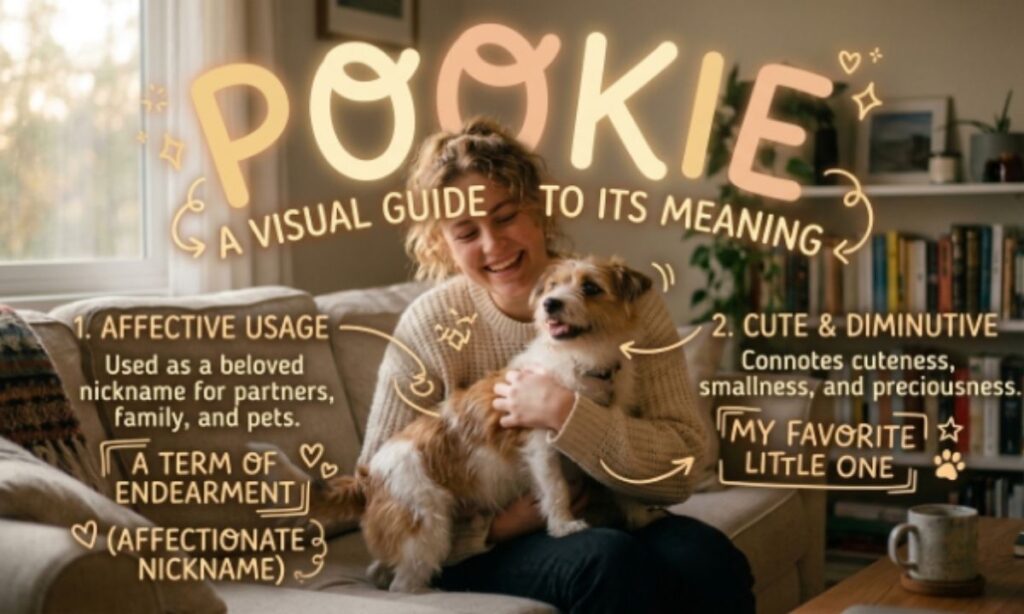
If you’ve seen “pookie” flooding your TikTok comments, group chats, or captions and wondered what it actually means, you’re not alone. The pookie meaning is simple at its core: it’s a term of endearment used for someone you love, adore, or feel close to — a partner, a best friend, a family member, or even a pet.
But the word carries more layers than that one-line definition suggests. It has decades of history behind it, a very specific TikTok-driven resurgence, and a handful of joke meanings that trip people up if they don’t know the context. This guide breaks down exactly what pookie means, where it came from, how it’s used across platforms today, and when it’s better left unsaid.
What Is the Pookie Meaning
At its simplest, pookie is a term of endearment — a nickname for someone a person adores. It’s used as a term of endearment for someone who is adored or loved, often specifically a romantic partner.
That said, pookie isn’t limited to romance. People use it for:
- A romantic partner or spouse
- A best friend or “bestie”
- A child, sibling, or close family member
- A pet
The tone is almost always warm, playful, and a little cutesy — closer in feeling to “babe” or “sweetie” than to a formal compliment.
Pookie Meaning Origin: Where Did the Word Come From
The word is older than most people assume. The first known print use of pookie as a general term of endearment appeared in the mid-1960s, though before that it was used as a nickname for a specific person. Its exact roots are debated among language researchers.
A few theories exist:
- A German connection: One popular theory suggests pookie evolved from the German word Püppchen (“little doll”), a tender name once used for children before it shifted toward adult romantic use.
- A Celtic connection: Another theory ties the word to Celtic folklore, referencing the púca — a shapeshifting, mischievous creature in Irish mythology.
- A pop-culture push: Garfield’s teddy bear was famously named Pookie, which cemented the word in mainstream memory for Gen X and older millennials.
According to Know Your Meme, the word’s roots as a name trace back to the 1930s in the United States, and it became widely associated with endearment by the 1960s. It was formally added to Urban Dictionary in 2005, defined as a term of endearment similar to “lovebug,” “cuddlemuffin,” or “honey.”
Why Did the Pookie Meaning Go Viral on TikTok
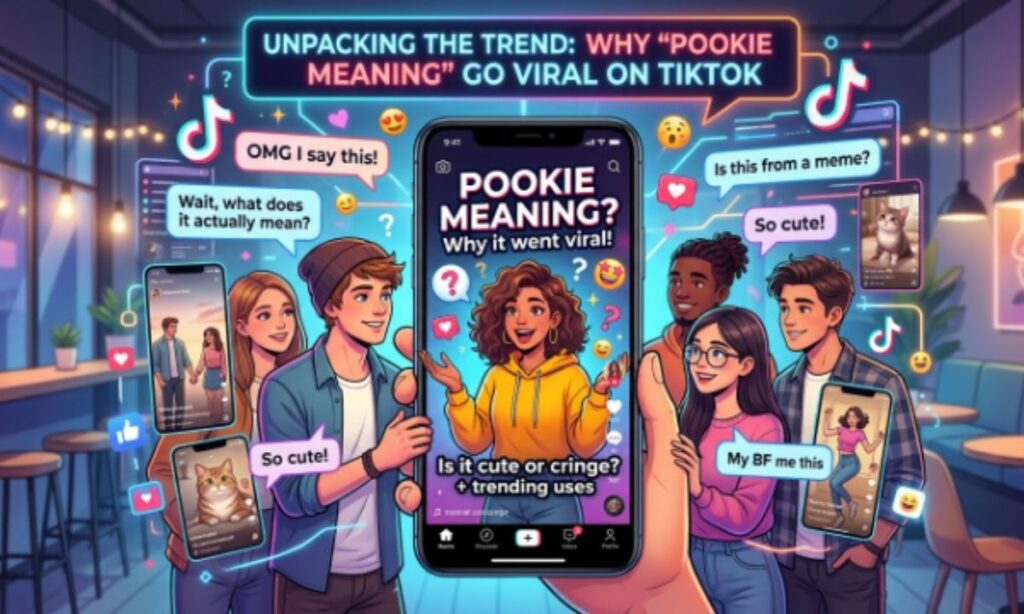
Pookie had already existed quietly for decades, but it exploded again in the early-to-mid 2020s. The term gained massive traction after a popular TikTok couple began using “pookie” in their outfit and lifestyle videos, and fans started recreating the trend, turning it into a widely used hashtag across platforms.
From there, the word spread quickly because it fit exactly how Gen Z communicates online:
- It’s short and easy to personalize — anyone can attach it to anyone.
- It’s playful, not serious — perfect for comments, captions, and inside jokes.
- It works both sincerely and ironically, which makes it flexible across different kinds of content.
Once creators, comment sections, and fan communities picked it up, “pookie” became a go-to word for expressing affection toward friends, partners, celebrities, and fictional characters alike.
How Different Platforms Use the Pookie Meaning
The core meaning of pookie stays consistent, but the way people use it shifts slightly depending on where you see it:
- TikTok: Used in comments, captions, and duets to express fondness for a creator, friend, or partner — often paired with heart or teddy bear emojis.
- Instagram: Common in captions for couple posts, best-friend posts, or pet photos.
- Twitter/X: Frequently used to describe an admired celebrity or public figure (“she’s everyone’s pookie”).
- Text messages/DMs: A direct, personal nickname for a partner or close friend.
- YouTube/Twitch chat: Sometimes used affectionately toward a streamer or content creator by their audience.
Who Do People Call Pookie
There’s no strict rule about who qualifies as a “pookie.” In practice, people use it for:
- Boyfriends, girlfriends, husbands, and wives
- Close friends, especially a best friend
- Children and younger siblings
- Grandparents calling grandchildren “pookie” (and vice versa)
- Pets, especially dogs and cats
- Celebrities or public figures a fan feels affectionate toward
Because the word is so flexible, context (not the word itself) usually tells you what kind of relationship is being described.
Is the Pookie Meaning Romantic or Platonic
It can be either — and that’s part of what makes it useful. Pookie doesn’t automatically imply romance the way “babe” or “boo” often does.
- Used between partners, it reads as romantic.
- Used between friends, it reads as platonic, similar to calling someone “bestie.”
- Used for a pet or child, it reads as familial affection.
The relationship between the speaker and the person they’re addressing determines the tone, not the word itself.
Pookie Meaning Across the Platforms
| Platform | Common Usage | Typical Tone |
| TikTok | Comments, captions, duets | Playful, trend-driven |
| Couple or pet captions | Sweet, personal | |
| Twitter/X | Fan admiration for celebrities | Casual, half-joking |
| Text/DMs | Direct nickname for partner or friend | Intimate, sincere |
| YouTube/Twitch | Chat term for a favorite streamer | Community-based, affectionate |
When to Use and When Not to Use Pookie
Like most slang terms of endearment, pookie works well in casual, personal settings but can feel out of place elsewhere.
| Situation | Use Pookie? | Why |
| Texting a partner or close friend | ✅ Yes | Casual, affectionate context fits |
| Commenting on a friend’s post | ✅ Yes | Common, low-stakes usage |
| Talking to a pet | ✅ Yes | Harmless and widely understood |
| A first date or new relationship | ⚠️ Maybe | Can feel too familiar too soon |
| Workplace or professional messages | ❌ No | Reads as unprofessional |
| Addressing someone who dislikes nicknames | ❌ No | Can feel presumptuous or annoying |
Pookie Meaning vs. Other Terms of Endearment
Pookie sits alongside a long list of affectionate nicknames, but it has its own flavor — a little quirkier and more playful than classics like “babe” or “honey.”
- Babe/Baby: More overtly romantic, used almost exclusively for partners.
- Bestie: Strictly platonic, used for close friends only.
- Sweetie/Honey: Gentle and warm, but often feels more traditional or older-generation.
- Boo: Similar romantic weight to “babe,” common in casual dating contexts.
- Pookie: Flexible across romantic, platonic, and familial relationships, with a lighter, more playful tone than most alternatives.
How Do You Know If Someone Means It
Context clues usually make the intent clear:
- Tone of the conversation — if the rest of the message is warm and personal, pookie is sincere.
- Frequency of use — a nickname used consistently over time usually signals genuine affection.
- Accompanying emojis or language — heart emojis and gentle phrasing suggest sincerity; exaggerated or joking language suggests it’s being used playfully.
- The relationship itself — pookie from a close friend or partner almost always carries real warmth, even if the delivery is casual.
When the Pookie Meaning Might Not Land Well
Despite its sweetness, pookie doesn’t work in every context. It can fall flat — or feel awkward — when:
- It’s used too early in a new relationship or friendship, before real closeness exists
- It’s used in a professional or formal setting
- The other person has expressed they don’t like nicknames
- It’s used sarcastically toward someone who won’t recognize the joke, which can come across as mocking rather than affectionate
Why Nicknames Like Pookie Feel So Powerful
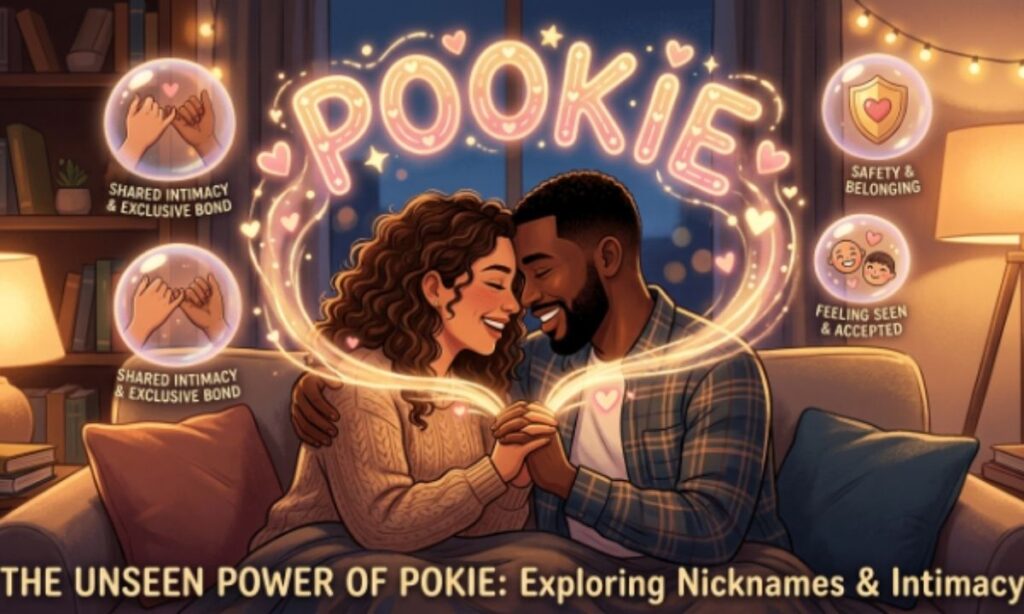
Nicknames like pookie work because they create a small, shared language between two people (or within a friend group). Using a nickname instead of someone’s actual name signals familiarity — it says “we’re close enough that formal names don’t apply here.”
That’s also why pookie caught on so widely online: it lets strangers on the internet borrow the feeling of closeness, even in a passing comment on a stranger’s video.
What Are Cute Alternatives to Pookie
If pookie doesn’t quite fit your relationship or personality, similar affectionate nicknames include:
- Bubba
- Boo
- Munchkin
- Sweet pea
- Love bug
- Cutie
- Snookums
- Bestie
How Do You Use Pookie Naturally in a Conversation
Pookie works best when it’s dropped in casually, not forced. A few natural examples:
- “Morning, pookie! Hope you slept well.”
- “Stop being so cute, pookie, you’re making me smile.”
- “That’s my pookie right there” (introducing or referring to a close friend).
- “Pookie needs a treat” (talking about a pet).
The key is tone: light, warm, and unforced. Overusing it in a formal or serious message tends to undercut the effect.
Other Meanings of Pookie
Pookie Meaning Fart
This one confuses a lot of people, and it comes from two different places. One claim traces a “fart” meaning to the Tulu language, where the word is said to carry that definition. Separately, and more relevant to why people search this today, a viral “pookie is a fart” trend spread online as a joke that intentionally subverts the word’s traditional sweet meaning. In everyday English usage, this is a joke or meme reference — not the standard meaning of the word.
Pookie Meaning Slang
As slang, pookie functions as an all-purpose term of endearment for someone you’re fond of, used interchangeably across romantic, platonic, and family relationships, especially by younger internet users.
Pookie Meaning From a Girl
When a girl calls someone pookie, it usually signals warmth and closeness — this could mean a boyfriend, a close guy friend, or even a girl best friend. The word itself doesn’t confirm romantic interest; the surrounding conversation does.
Pookie Meaning in Love
In a romantic context, pookie functions similarly to “babe” or “baby” — a soft, affectionate nickname partners use for each other, often signaling comfort and established closeness rather than early-stage flirting.
Twisting the Pookie Meaning
Online creators sometimes intentionally “twist” the word — using it sarcastically, ironically, or attaching it to unexpected things (objects, memes, inside jokes) purely for comedic effect. This is part of why the word has stayed relevant: it’s flexible enough to be remixed constantly.
Pookie Meaning Gen Z
For Gen Z, pookie is an affectionate nickname for a partner, close friend, or pet — a term of endearment that isn’t necessarily romantic, and one that took off specifically through TikTok. It’s now common enough that it functions almost like a generational shorthand for “someone I care about.”
Pookie Meaning in Other Languages
While pookie is an English-language term, similar affectionate nicknames exist across cultures — for example, comparable “cuddle bug” or “honey”-style pet names exist in other languages, even if the exact word differs. The Tulu “fart” association mentioned above is the one notable exception where the word (or a similar-sounding one) carries an entirely unrelated meaning.
Frequently Asked Questions
What does “pookie” mean in popular culture?
In popular culture, pookie is best known as the name of Garfield the Cat’s teddy bear, a reference that introduced the word to a wide audience decades before its TikTok resurgence.
What does the pet name “pookie” signify?
As a pet name, pookie signifies closeness and affection — it tells the other person they’re someone the speaker feels warmth toward, whether romantically or platonically.
What is the cultural significance of “pookie” as a term of endearment?
Pookie represents how slang terms evolve and resurface across generations — from a 1960s nickname, to a Garfield reference, to a 2020s TikTok trend, all while keeping its core meaning of affection intact.
Is pookie a compliment?
Yes, pookie is generally considered a compliment, since it signals that the speaker feels fondness, closeness, or affection toward the person they’re calling it.
Can you call a guy pookie?
Yes, pookie is gender-neutral and commonly used for boyfriends, male best friends, brothers, and other close male relationships.
Is pookie only used for romantic partners?
No, pookie is frequently used platonically for close friends, family members, and pets, not just romantic partners.
What’s the difference between pookie and babe?
Babe almost always implies a romantic relationship, while pookie is more flexible and can be used platonically for friends, family, or pets as well.
Why do people call their pets pookie?
People call pets pookie for the same reason they use it for humans — it’s a warm, affectionate nickname that expresses fondness, and it fits especially well with a pet’s playful, cuddly image.
Final Thoughts
The pookie meaning has stayed remarkably consistent for over half a century: it’s a term of endearment for someone you care about, whether that’s a partner, a friend, a family member, or a pet. What’s changed is how widely and playfully it’s used — TikTok turned a quiet, old-fashioned nickname into one of the most recognizable affectionate terms among younger generations today. As long as you read the context and relationship correctly, calling someone your pookie is a simple, low-stakes way to show you care.

The author is a professional content writer specializing in word meanings, definitions, and English vocabulary. With over 6 years of experience in language research and educational content creation, they produce accurate, well-researched, and reader-friendly articles.