
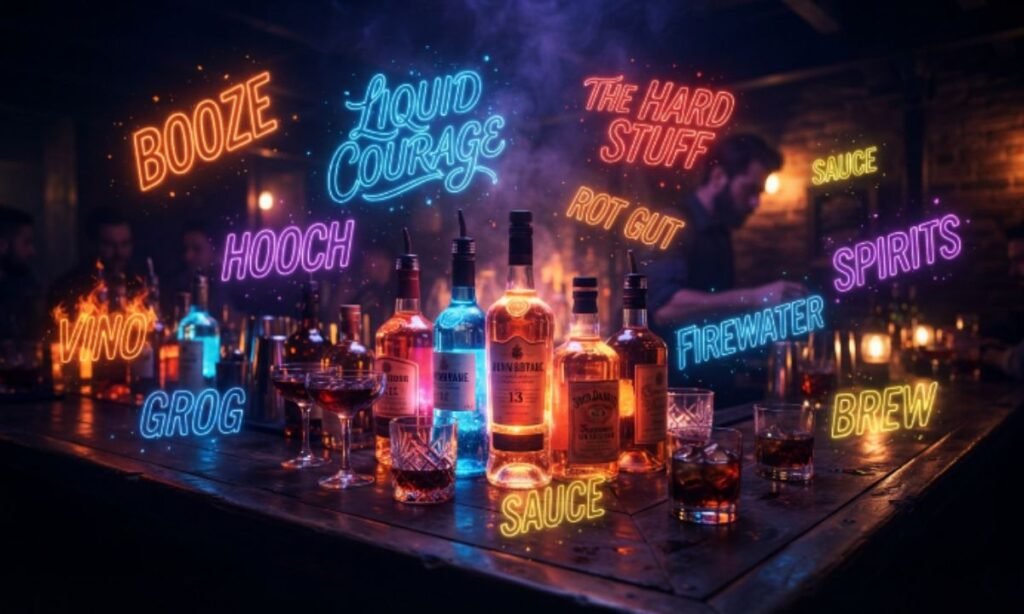
Nobody actually says “I’d like to consume an alcoholic beverage.” They say they’re “grabbing a brew,” bringing “the sauce,” or asking if anyone wants a “nightcap.” Slang for alcohol has been around for centuries, and it keeps evolving — some terms come from old tavern culture, others from TikTok trends that caught on overnight.
This guide rounds up the most commonly used slang terms for alcohol in 2026, what each one actually means, and how to use them naturally without sounding like you’re trying too hard (or dating yourself).
20 Slang Terms for Alcohol
Booze
The most universal, catch-all slang word for alcohol in general. “Did you grab the booze for the party?” Works in almost any casual setting, though it’s too informal for professional writing.
Sauce
Refers to alcohol, often used when someone’s clearly had a few. “He’s deep in the sauce tonight.” Common in casual and online conversation.
Liquid Courage
Alcohol consumed specifically to feel bolder or less nervous before doing something — public speaking, asking someone out, karaoke. “A little liquid courage before the toast.”
Brews
Typically refers to beer, especially in casual or outdoor-gathering contexts. “Grab a few brews for the game.”
Firewater
An old slang term for strong, hard liquor — usually whiskey or similarly potent spirits. “That firewater will knock you out.”
Giggle Juice
A playful, lighthearted term for alcohol, usually used humorously rather than literally. “One more giggle juice and we’re calling it a night.”
Tipsy Juice
Similar to “giggle juice” — a casual, joking way to refer to alcohol, usually at a lighter drinking stage. “She’s on her second tipsy juice.”
The Hard Stuff
Refers specifically to hard liquor or spirits, as opposed to beer or wine. “Skip the hard stuff tonight, I’m driving.”
Nightcap
A drink had at the very end of the night, often right before heading to bed. “One nightcap and I’m calling it.”
Happy Juice
A playful term for alcohol that improves someone’s mood, often used at parties. “This party needs some happy juice.”
Cold One
Almost always refers to a chilled beer. “Want a cold one after the game?”
Spirits
A more traditional, slightly formal-sounding term for distilled alcohol like whiskey, vodka, or rum. “Do you prefer beer or spirits?”
Party Fuel
Alcohol framed as what keeps the celebration going. “We’re low on party fuel, someone make a run.”
Sauce Bottle
A casual, often humorous way to refer to a bottle of liquor. “Pass the sauce bottle.”
Drank
A stylized, informal spelling of “drink,” popularized through music and social media, often referring to alcohol generally. “We got the drank for tonight.”
Hooch
An old-school term for homemade or low-quality alcohol, still used today for alcohol in general. “Where’d you get this hooch?”
Cheeky Few
A British-leaning phrase meaning a small, casual round of drinks, often implying it might not stay small. “Fancy a cheeky few after work?”
Suds
Refers to beer, playing off its foamy head. “Grab some suds for the barbecue.”
Poison (Your Poison)
Used to ask what someone wants to drink, as in “what’s your poison?” — a lighthearted way to ask for a drink order.
Bevvies
A casual British shorthand for “beverages,” almost always implying alcoholic drinks in context. “Heading out for some bevvies tonight.”
Gen Z Slang for Alcohol
Current terms popular with younger drinkers include drank, sauce, hard seltzer szn (season), pregame, and tequila szn — often tied to a specific drink trend or social-media moment rather than alcohol generally. Gen Z slang for alcohol also frequently borrows from music and meme culture, meaning some terms have a short shelf life before a new one takes over.
Nickname for Alcoholic Friend
Used carefully and typically in jest among close friends, common nicknames include “the mixologist,” “party captain,” or “designated bartender” — playful labels for the friend who always brings or makes the drinks. These are meant to be lighthearted; they’re not a substitute for a real conversation if someone’s drinking has become a genuine concern.
British Slang for Alcohol
British English has its own strong tradition of drinking slang, including bevvies, cheeky few, tipple, plastered, and sloshed. Regional variation is common — terms popular in London pub culture may differ from those used in Scotland or Ireland.
Short Phrases for Drinking Alcohol
Common short phrases include “grab a drink,” “have a few,” “hit the bar,” “crack one open,” and “round’s on me.” These work well in texting or casual invites without sounding overly formal or overly slangy.
Slang for Alcohol Drink
When referring to a specific drink rather than alcohol in general, common terms include cold one (beer), nightcap (a final drink), the hard stuff (liquor), and spirits (distilled alcohol) — each implying a different type or context of drink.
Generational Slang Comparison
| Generation | Common Terms | Style |
| Gen Z | Drank, sauce, pregame, hard seltzer szn | Trend-driven, tied to social media and music |
| Millennials | Booze, cold one, liquid courage | Casual, widely understood |
| Gen X / Older | Spirits, hooch, nightcap, firewater | Classic, works across most age groups |
| British English | Bevvies, cheeky few, tipple, plastered | Regionally distinct, pub-culture rooted |
How to Use Slang Naturally Without Sounding Awkward
- Match the setting. “Sauce” and “the hard stuff” fit a casual hangout, not a work happy hour toast.
- Match the audience. Slang lands better with peers than with someone you don’t know well or an older relative.
- Don’t stack too many terms. One natural phrase reads better than three slang words in a single sentence.
- Consider tone. Playful terms like “giggle juice” work for lighthearted moments, not serious conversations about someone’s drinking habits.
- When in doubt, keep it simple. “Want a drink?” is never wrong if you’re unsure whether a slang term fits the moment.
Common Slang Mistakes
- Using regional slang out of context — British terms like “bevvies” can sound out of place in casual American conversation, and vice versa.
- Mixing playful and serious tone — joking terms like “happy juice” don’t fit conversations about someone struggling with alcohol.
- Overusing dated terms, which can make conversation feel stiff rather than casual.
- Assuming slang translates directly — some terms (like “pull,” meaning drinking straight from the bottle) aren’t widely understood outside specific circles.
Frequently Asked Questions
What is the most common slang word for alcohol?
“Booze” is the most widely recognized, catch-all slang term for alcohol across most English-speaking regions.
What do the British call alcohol?
Common British slang includes “bevvies,” “tipple,” and “cheeky few,” often used casually when discussing plans to drink.
What is Gen Z slang for getting drunk?
Terms like “hammered,” “smashed,” and “wasted” remain widely used, alongside newer phrases tied to specific drink trends.
What is a nightcap?
A nightcap is a drink had at the very end of the evening, often right before going to bed.
What does “liquid courage” mean?
It refers to alcohol consumed specifically to feel more confident before doing something nerve-wracking, like public speaking.
What’s another word for beer slang?
Common slang for beer includes “brew,” “cold one,” and “suds.”
What does “what’s your poison” mean?
It’s a casual, friendly way of asking someone what they’d like to drink.
Is “sauce” always alcohol slang?
In casual conversation, yes — “sauce” and “in the sauce” typically refer to alcohol or being noticeably affected by it.
What’s a polite way to refer to alcohol without using slang?
Terms like “a drink,” “a beverage,” or “spirits” work well in more formal or professional contexts.
Final Thoughts
Slang for alcohol reflects how casually — and how often — drinking comes up in everyday conversation, from classic terms like “booze” and “spirits” to newer, trend-driven phrases picked up from social media. The key isn’t memorizing every term on this list; it’s knowing which ones fit your audience, setting, and tone. Used thoughtfully, slang makes conversation feel natural. Used carelessly, it can come across as trying too hard — or land wrong in a moment that calls for something more direct.

The author is a professional content writer specializing in word meanings, definitions, and English vocabulary. With over 6 years of experience in language research and educational content creation, they produce accurate, well-researched, and reader-friendly articles.