
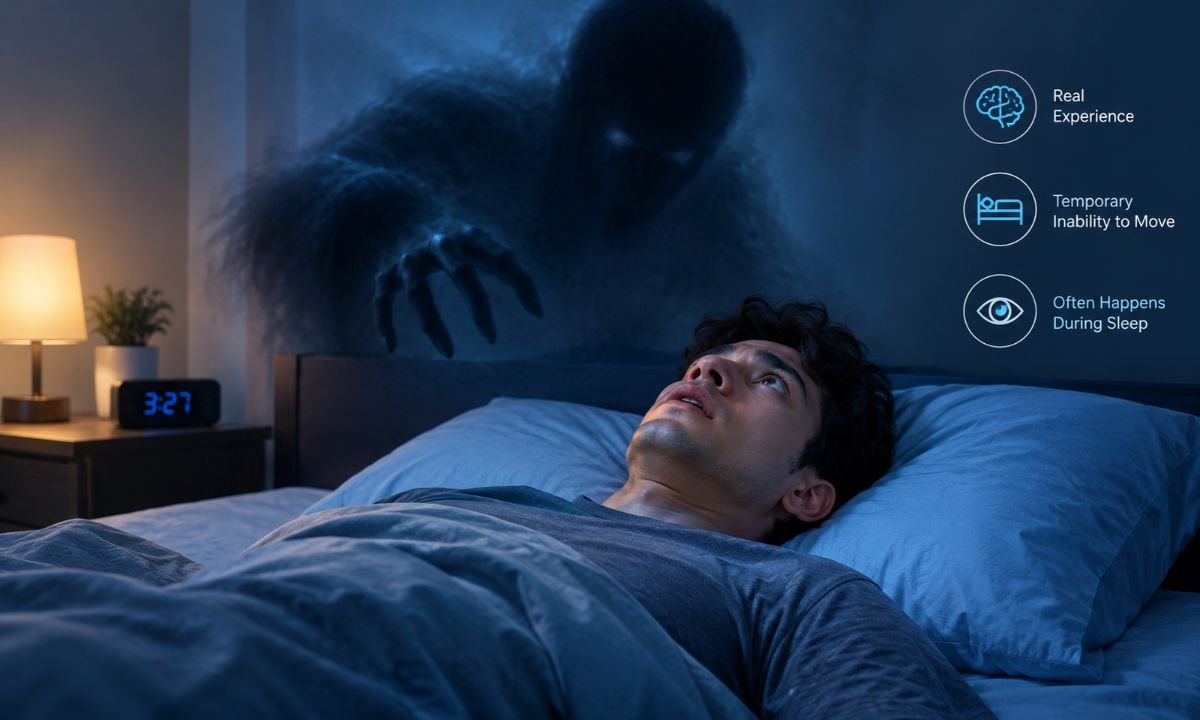
Sleep paralysis meaning, in simple words, is waking up mentally but being unable to move your body. You may be fully aware of the room around you, yet your arms, legs, and voice won’t respond. It lasts only seconds to a couple of minutes, but it can feel much longer.
This guide explains what sleep paralysis means in medical and cultural terms, why it happens, and why people see shadows or feel a weight on the chest. You will also learn how to stop an episode, how to prevent the next one, and when to talk to a doctor.
Sleep Paralysis Meaning
Sleep paralysis is a temporary loss of muscle control that happens while falling asleep or waking up. Your brain is awake, but your body is still in “sleep mode.” It is classed as a parasomnia, which is a type of unusual sleep behavior.
It is harmless in most cases. The scary part is how real it feels.
Examples
- You wake at 3 a.m., see your bedroom clearly, and cannot lift a finger.
- You feel a heavy pressure on your chest while you try to shout and no sound comes out.
- You are drifting off and suddenly feel “frozen” while you still hear the TV in the next room.
- You wake up sensing someone standing at the foot of your bed.
Sleep Paralysis Spiritual Meaning
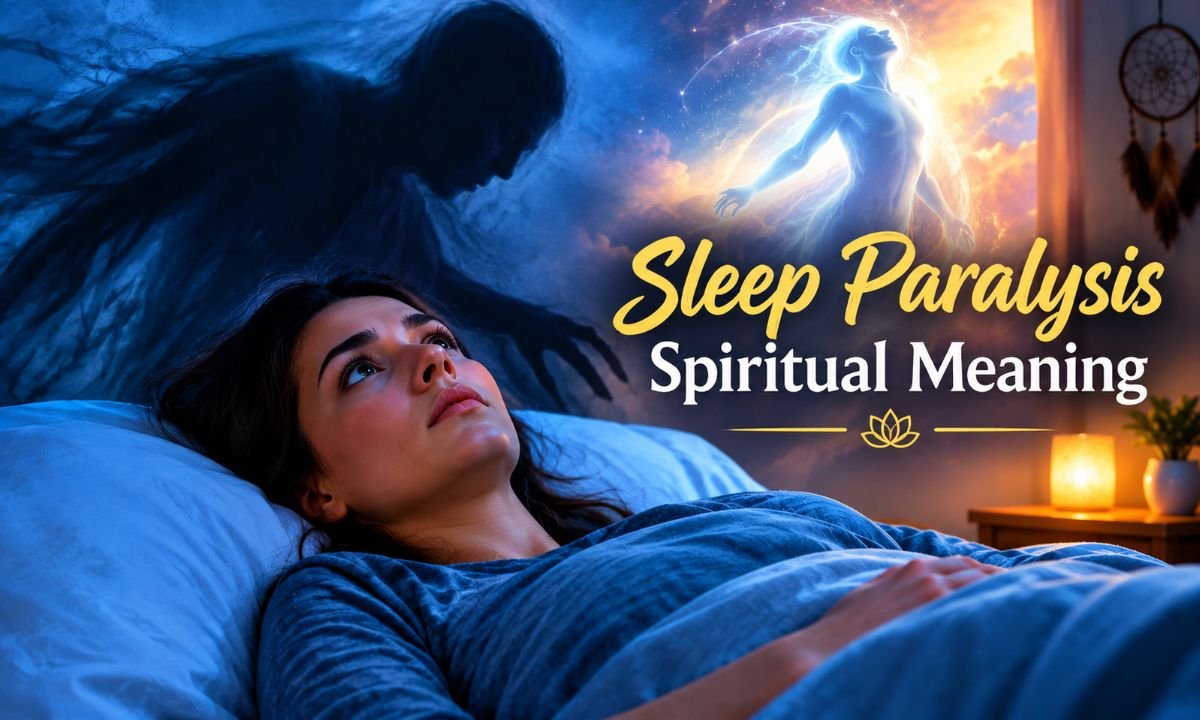
Many cultures treat sleep paralysis as a spiritual event rather than a medical one. Some people see it as a visit from a spirit. Others see it as a warning, a test, or a sign of spiritual attack.
Science explains the body side of it. Faith and folklore explain what the experience means to the person living through it. Both views can exist side by side.
Examples
- Old Hag (Newfoundland, Canada): a crone who sits on your chest.
- Kanashibari (Japan): being “bound as if in metal.”
- Karabasan (Turkey): a dark presence that presses you down.
- Jinn (Middle East and North Africa): a spirit blamed for the weight and fear.
- Ma đè (Vietnam): “held down by a ghost.”
- Mara (Scandinavia): the creature behind the word “nightmare.”
What Does Sleep Paralysis Mean?
Medically, it means your sleep stages overlapped. During REM sleep, your brain switches off most muscles so you don’t act out dreams. In sleep paralysis, awareness returns before that switch turns off.
It is not a sign of madness, a curse, or a serious illness. For most people it is a sleep glitch tied to stress, poor rest, or an irregular schedule.
What Is Sleep Paralysis and How Does It Happen?
Normal sleep moves through cycles of light sleep, deep sleep, and REM. REM is when vivid dreams happen, and your muscles are relaxed on purpose to keep you safe.
Sleep paralysis happens at the edges of that cycle. If it appears as you fall asleep, it is called hypnagogic. If it appears as you wake up, it is called hypnopompic.
There are two main types:
- Isolated sleep paralysis: occasional episodes with no other sleep disorder.
- Recurrent sleep paralysis: repeated episodes, sometimes linked to narcolepsy or other conditions.
What Are the Common Symptoms of Sleep Paralysis?
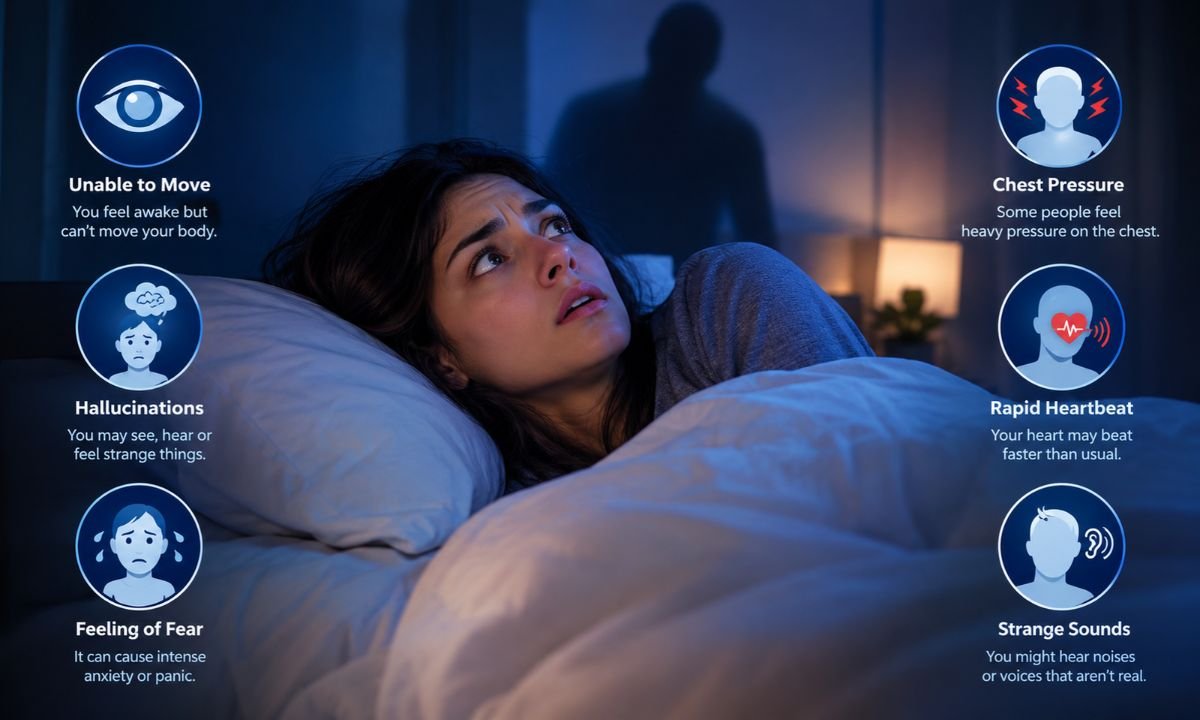
The main sign is being unable to move or speak while awake. Most people also notice other things:
- A feeling of pressure or weight on the chest
- Trouble breathing deeply, or a fear of suffocating
- Sudden fear, panic, or dread
- Seeing shapes, shadows, or figures
- Hearing buzzing, footsteps, whispers, or voices
- A sense that someone is in the room
- Sweating or a racing heart after the episode ends
Episodes usually stop on their own. A sound, a touch, or a small movement can end one.
What Causes Sleep Paralysis?
No single cause explains every case. Several triggers raise the chances:
| Trigger | Why it matters |
|---|---|
| Sleep deprivation | Pushes the brain into REM too fast and disturbs sleep stages |
| Irregular sleep schedule | Shift work and jet lag confuse the body clock |
| Stress and anxiety | Make sleep lighter and more broken |
| Sleeping on your back | Linked to more frequent episodes in some people |
| Narcolepsy | Causes abrupt shifts between sleep and waking |
| Sleep apnea and insomnia | Break up sleep during the night |
| Some medications and substances | Can disturb REM sleep |
| Family history | Genes may play a role |
PTSD, panic disorder, and other mental health conditions are also linked to more episodes.
Why Do People See Figures or Shadows During Sleep Paralysis?
The brain is half in dream mode and half awake. Dream imagery spills into the real room, so you “see” things that are not there.
Researchers group these experiences in three ways:
- Intruder: a sense of a person or presence nearby.
- Pressure (incubus): a weight on the chest and trouble breathing.
- Floating or movement: feeling like you are flying, spinning, or leaving your body.
Fear makes it worse. Your brain senses danger because you can’t move, then builds a threat to match. That is why many people report a dark figure, even in different countries.
Is Sleep Paralysis Dangerous?
No. Sleep paralysis itself does not harm your body or brain. Your breathing continues normally, even if it feels tight.
The risks are indirect. Repeated episodes can cause fear of going to bed, poor sleep, and daytime tiredness.
What Is the Spiritual Meaning of Sleep Paralysis?
There is no single spiritual meaning. People interpret it based on faith and background. Common beliefs include:
- Spiritual attack: an evil presence trying to scare or control you.
- Ancestral or spirit visit: a message or contact from the unseen world.
- Warning: a sign to pay attention to stress, health, or life choices.
- Spiritual awakening: a moment of heightened awareness between worlds.
- Folklore creature: a witch, hag, jinn, or mare.
Some researchers note that many people find the experience deeply spiritual, even where no local tradition exists. Others say culture shapes what people see. No test can prove or disprove these beliefs, so treat them as personal or cultural views.
What Is the Scientific Explanation for Sleep Paralysis?
The leading explanation is REM atonia, the muscle shutdown that normally protects you during dreams. In sleep paralysis, that shutdown continues for a short time after your mind wakes up.
At the same time, the fear centers of the brain are active, and dream content mixes with reality. The result is paralysis, panic, and hallucinations together. Brain scans and sleep studies support this REM-overlap model.
Studies suggest roughly 8% of people experience it at some point. The rate is higher among students and people with anxiety or sleep problems.
How Can You Stop Sleep Paralysis Episodes?
There is no guaranteed method, but these steps may help you break out sooner:
- Stay calm. Remind yourself it is temporary and harmless.
- Move something small. Try wiggling a finger, toe, or your eyes.
- Breathe slowly. Focus on long, steady breaths.
- Focus on your face. Try to blink or move your tongue.
- Don’t fight hard. Panic often makes the episode feel longer.
Once it ends, change your position and get a drink of water if you can.
How Can You Prevent Sleep Paralysis?
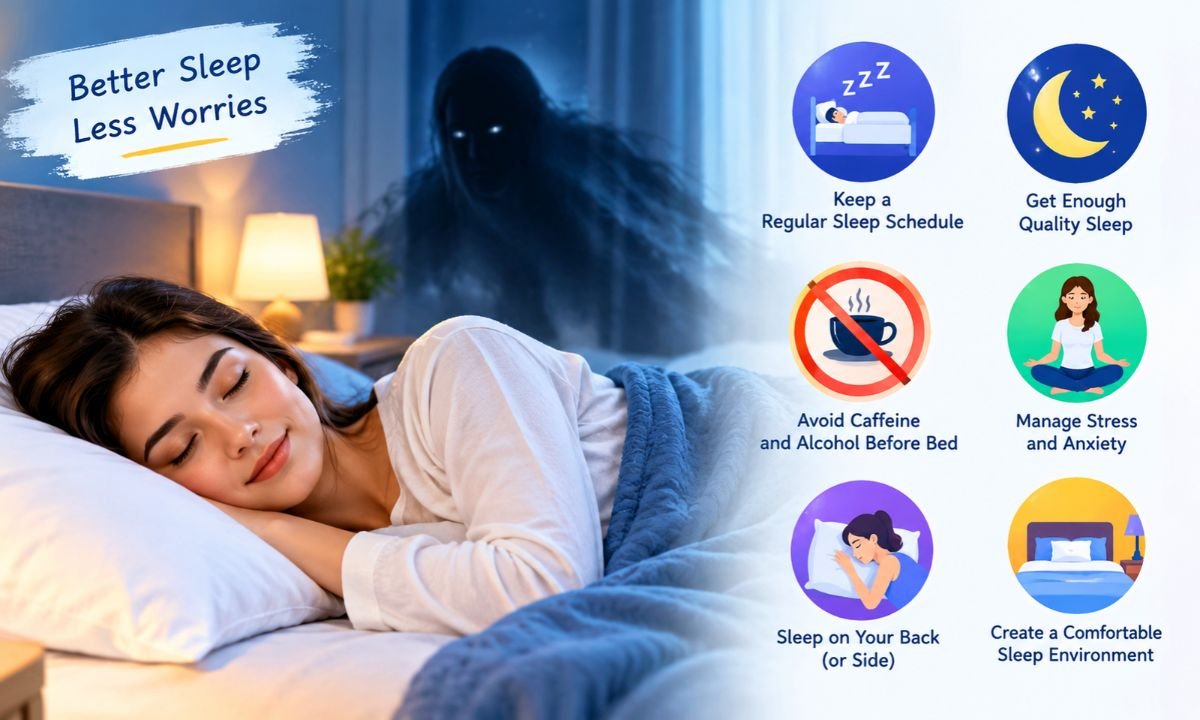
Better sleep habits are the best prevention:
- Sleep 7 to 9 hours each night
- Keep a fixed bedtime and wake time
- Avoid caffeine and heavy meals late at night
- Limit alcohol, which breaks up sleep
- Keep your bedroom dark, cool, and quiet
- Try sleeping on your side
- Reduce screen time before bed
- Practice relaxation, journaling, or meditation to lower stress
If a medical condition such as sleep apnea or narcolepsy is behind it, treating that condition usually helps.
Does Sleep Paralysis Have a Connection to Dreams?
Yes. It is closely linked to REM sleep, the stage where most vivid dreaming happens. The hallucinations often feel like a dream you can see with open eyes.
The difference is that you know you are awake. Your body is paralyzed like in a dream, but your mind is not.
Who Is More Likely to Experience Sleep Paralysis?
Anyone can have it, but it is more common in:
- Teenagers and young adults
- People who sleep poorly or work irregular shifts
- Those with stress, anxiety, depression, or PTSD
- People with narcolepsy or sleep apnea
- Anyone with a family history of it
When Should You See a Doctor About Sleep Paralysis?
See a doctor if:
- Episodes happen often or are getting worse
- You feel very tired during the day
- You fall asleep suddenly or lose muscle strength when you laugh or feel strong emotion
- Fear of sleep is hurting your daily life
- You think a medicine or another condition is involved
A doctor may refer you to a sleep specialist for tests or treatment.
What Is the Difference Between Sleep Paralysis and Nightmares?
| Feature | Sleep paralysis | Nightmare |
|---|---|---|
| Awareness | Awake and aware | Asleep and dreaming |
| Movement | Cannot move | Body may twitch or move |
| Surroundings | Sees the real room | Dream setting |
| Ending | Passes in seconds to minutes | You wake up from the dream |
| Memory | Very clear | May fade quickly |
Can Sleep Paralysis Kill You?
No. There is no medical evidence that sleep paralysis causes death. Your breathing muscles keep working, even though the chest feels heavy.
Is Sleep Paralysis Scary?
Yes, very often. The mix of helplessness, hallucinations, and fear can feel terrifying. Knowing what it is makes later episodes easier to handle.
Frequently Asked Questions
How long does sleep paralysis last?
Usually a few seconds to about two minutes. It can feel much longer because of fear.
Is sleep paralysis a sign of a mental illness?
No. It is common in healthy people, though stress and anxiety can make it more frequent.
Can sleep paralysis happen during the day?
Yes. It can occur during naps, especially when you are sleep-deprived.
Why does it feel like someone is sitting on my chest?
Your brain senses the stillness and shallow breathing, then builds a pressure sensation. It is a hallucination, not a real weight.
Can stress cause sleep paralysis?
Yes. Stress and anxiety disturb sleep and raise the chance of episodes.
Does sleep paralysis go away on its own?
For many people, yes. Better sleep and less stress often reduce or stop it.
Is sleep paralysis hereditary?
It may run in families, but genes are only one factor.
Can children get sleep paralysis?
Yes, though it is more common in teens and young adults.
Conclusion
The sleep paralysis meaning comes down to one idea: your mind wakes up before your body does. It is frightening but harmless, and it passes quickly. Poor sleep, stress, and irregular schedules are the most common triggers.
Cultures around the world give it spiritual meanings, from hags to jinn to ghosts, and those stories help many people make sense of it. If episodes are frequent or disrupt your life, talk to a doctor. Otherwise, steady sleep habits and calm breathing are your best tools.

The author is a professional content writer specializing in word meanings, definitions, and English vocabulary. With over 6 years of experience in language research and educational content creation, they produce accurate, well-researched, and reader-friendly articles.