
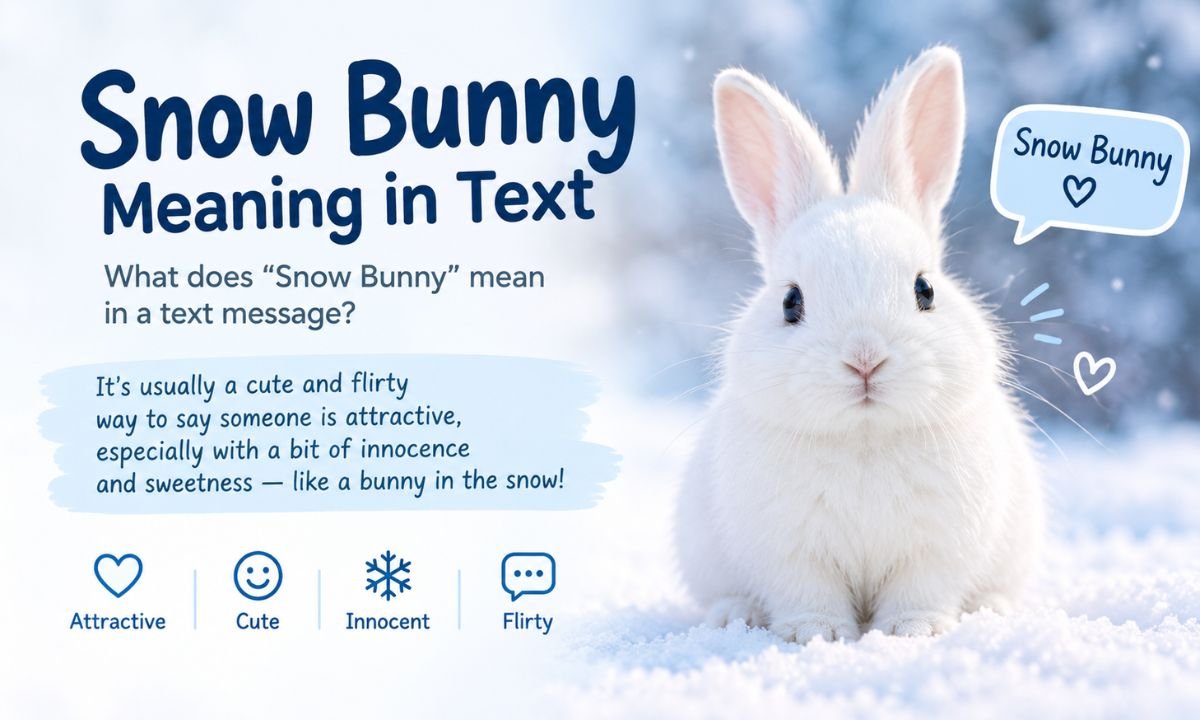
If you’ve seen “snow bunny” pop up in a text, a TikTok comment, or a tweet and aren’t sure what it means, you’re not alone. It’s one of those slang terms that carries two very different meanings depending on who’s using it. In its original sense, a snow bunny is simply someone — usually a woman — who loves skiing, snowboarding, or the winter lifestyle. In modern slang, especially online and in hip-hop culture, it more often refers to a white woman who’s romantically drawn to Black men. Snow Bunny Meaning explained?
This guide breaks down both meanings, shows real texting examples, and explains when the term is playful versus when it can come across as offensive.
Most Common Meanings of “Snow Bunny”
At its core, “snow bunny” has three overlapping meanings that shifted over decades of use. Here’s a quick breakdown before we go deeper.
| Meaning | Where It’s Used | Tone |
| Winter sports lover/beginner skier | Ski resorts, outdoor communities | Neutral to affectionate |
| Slang for a white woman (often dating context) | Social media, hip-hop lyrics, texting | Can be playful or offensive |
| Winter fashion/lifestyle aesthetic | Instagram, TikTok, influencer content | Neutral, aesthetic-focused |
1. A Person Who Loves Winter Sports (Most Common)
This is the original and still most widely understood definition. A snow bunny is someone enthusiastic about skiing or snowboarding — sometimes specifically a beginner still learning on the easy “bunny slope,” and sometimes just an attractive, stylish person who’s often seen at the lodge more than on the black-diamond runs. Either way, it’s generally a light, friendly label rather than an insult.
2. Slang for a White Woman
In contemporary internet and AAVE (African American Vernacular English) slang, “snow bunny” has taken on a second, unrelated meaning: a white woman, often specifically one who prefers dating Black men. This usage became common in hip-hop lyrics and online dating discourse through the 2000s and 2010s, and it’s the meaning most likely to show up in a text today if the context isn’t about skiing at all.
3. Fashion or Lifestyle Reference
A third, more aesthetic-driven meaning has grown on TikTok and Instagram: “snow bunny” as a look — think white faux fur, pastel ski jackets, and cozy cabin photos. Here it has nothing to do with race or relationships; it’s simply shorthand for a winter fashion vibe.
Snow Bunny Origin
The phrase traces back to 1950s and ’60s ski culture in North America, when resorts became social hotspots as much as sporting ones. “Bunny” already meant an attractive young woman in American slang going back to the 1700s, and skiing had its own “bunny slope” for beginners. Combine the two, and “snow bunny” emerged to describe a young woman at the resort — sometimes a novice still finding her footing, sometimes simply someone enjoying the social scene in stylish winter gear. That ski-culture meaning is the “original” one, even though it’s no longer the most common meaning you’ll see in a text message today.
Snow Bunny White Girl
This is the meaning behind most modern text and social media use. When someone says “she’s a snow bunny,” they usually mean a white woman, often one who’s said to prefer or exclusively date Black men. The word “snow” nods to whiteness, while “bunny” carries the older sense of an attractive or approachable woman. It’s frequently used in music, memes, and casual conversation, and — like a lot of slang tied to race and dating — it can land anywhere from harmless banter to genuinely offensive, depending on tone, relationship, and intent.
Snow Bunny Mind Control Meaning Slang
“Snowbunny mind control” is a specific internet meme, not a separate dictionary definition. It started in May 2024 after a YouTuber posted a video titled “White Girls Control Underground Music,” paired with a thumbnail image captioned “Snowbunny Mind Control.” The phrase went viral as a reaction image on X (Twitter) and spread into general meme use by late 2024. It’s used, often jokingly, to describe a white woman having noticeable influence or charm over a man (typically framed as a Black man), to the point that his interests or behavior seem shaped by her. If you see this phrase in a text or comment, it’s almost always meme-speak rather than a serious accusation.
What is a Snow Bunny in Dating
In dating contexts — apps, group chats, social media bios — “snow bunny” almost always points to meaning #2: a white woman who prefers dating Black men, sometimes used by the woman herself as a lighthearted self-descriptor, sometimes used by others as a label or even a stereotype. Because it reduces a person’s dating preference to a racial category, some people find it flattering or fun, while others consider it reductive or fetishizing. If you’re unsure how someone means it, the safest move is to ask rather than assume.
What Does “Snow Bunny” Mean in Text Messages?
In a text, context is everything. If the conversation is about skiing trips, gear, or weekend plans, “snow bunny” almost certainly means the winter-sports sense. If it comes up in a conversation about someone’s “type,” dating preferences, or a specific person’s appearance, it’s almost certainly the racialized dating meaning. Tone matters too — a friend texting “you’re such a snow bunny 🏂❄️” after a ski trip reads very differently than the same phrase dropped into a conversation about who someone’s attracted to.
Examples in Conversations
“Can’t wait for the trip, my snow bunny era is starting early this year 🎿”
Comment on a ski-trip photo: “certified snow bunny fr, that fit is so cute”
Text Message
“lol he called her a snow bunny and she was NOT here for it”
“bro really said snowbunny mind control unprompted 😭”
TikTok
Caption on a winter outfit video: “snow bunny starter pack ❄️🧸”
Emotional Meaning
Depending on context, “snow bunny” can carry excitement (winter-sports pride), flirtation (dating-app self-description), amusement (meme usage), or discomfort (when used to stereotype someone’s dating pattern based on race). The same word, four very different feelings — which is exactly why reading the room before using it matters.
Where You’ll See It
You’ll most often run into “snow bunny” on TikTok and Instagram (fashion and ski content), X/Twitter (memes and dating discourse), rap lyrics, and group chats among skiers or snowboarders. It’s less common in formal writing or professional contexts, where it can read as either confusing or inappropriate.
When Not to Use It
Avoid using “snow bunny” to describe someone’s race or dating preference unless you know them well and understand how they’d feel about it — this usage can come across as reducing a person to a racial stereotype. It’s also worth skipping in professional settings, with people you’ve just met, or any time you’re not certain how the term will land.
Similar Expressions
- Ski bunny — near-identical to the winter-sports meaning of snow bunny
- Powder hound — someone obsessed with fresh snow and skiing conditions
- Snowflake (unrelated slang, different context) — often confused but means something entirely different
- Chaser — someone who specifically pursues partners of a certain race, a related but broader dating-slang term
- Snow bunny mind control — the 2024 meme discussed above
How to Reply if Someone Calls You a Snow Bunny
If it’s clearly about skiing or winter style, a simple “haha yep, guilty” works fine. If it’s used in a dating or racial context and it feels off to you, it’s completely reasonable to say something like “not really my thing, but thanks I guess” or ask directly what they meant. You’re allowed to set the tone for how the label is used around you.
Frequently Asked Questions
What does the snow bunny slang mean?
It most commonly refers to either a woman who loves winter sports, or — in modern slang — a white woman who prefers dating Black men. Context determines which meaning applies.
Why did a guy call me a snow bunny?
He’s likely referring either to your love of skiing/snowboarding or making a comment about your dating preferences; the friendliest way to find out is simply to ask him what he meant.
What does a snowbunny girl look like?
There’s no single “look” — in the ski-culture sense it usually means someone in stylish winter gear at a resort, while in the slang-dating sense it refers to identity, not appearance.
What does “bunny” mean in slang?
On its own, “bunny” has long meant an attractive, approachable young woman, and it’s also used for beginners (as in “bunny slope”), which is where much of “snow bunny’s” original meaning comes from.
Is calling someone a snow bunny offensive?
It depends entirely on context and intent — in a ski context it’s usually harmless, but when used to categorize someone’s dating preference by race, many people consider it reductive or offensive.
What’s the difference between a snow bunny and a ski bunny?
They’re essentially interchangeable in the winter-sports sense, though “ski bunny” leans slightly more toward the beginner-on-the-slopes meaning specifically.
What does snowbunny mind control mean on TikTok and Twitter?
It’s a 2024 meme phrase describing a white woman’s perceived charm or influence over a man, originating from a YouTube video thumbnail and spreading as a reaction image.
Is snow bunny a compliment?
It can be — many people use it affectionately for winter-sports enthusiasm or style — but as a comment on dating preference, it’s not universally taken as one.
Where did the term snow bunny originate?
It began in 1950s–60s North American ski culture, combining “bunny” (slang for an attractive or novice person) with “snow” to describe women at ski resorts.
Final Thoughts
“Snow bunny” is a rare slang term with two genuinely separate lives: a decades-old, mostly lighthearted label for winter-sports lovers, and a newer, more loaded meaning tied to race and dating that dominates its use in texts and on social media today. The context of the conversation — skiing trip or dating talk — will almost always tell you which one is meant. When in doubt, especially with the dating-related meaning, it’s worth checking in with the person before assuming how they’d want to be described.

The author is a professional content writer specializing in word meanings, definitions, and English vocabulary. With over 6 years of experience in language research and educational content creation, they produce accurate, well-researched, and reader-friendly articles.